Signal vs. Noise: Stock Market Concentration Concerns
The Player or the House?
We’re in the Hospitality Business
Client-Exclusive Webinar with David Booth, Co-Founder and Chairman of Dimensional
A Good Estate Plan Should Make Life Easier
Category: Education
Signal vs. Noise: Stock Market Concentration Concerns

Stop me if you’ve heard this before: The stock market is at record concentration levels. A handful of companies are driving market returns. There’s an AI bubble. FAANG stocks. The Magnificent Seven.
The names change, but the message is familiar. Today, much of the attention is focused on a handful of large technology companies at the center of the AI boom. Their strong performance has made them increasingly influential in the U.S. stock market, and the headlines can make it feel like investors need to do something about it.
The concentration is real. But before reacting to it, an evidence-based investor should step back, put on their Long View lens, and ask a more useful question: What does this actually mean for my portfolio?
The S&P 500 Has Become More Concentrated
Concentration, in investing terms, refers to how much of a portfolio is allocated to a particular stock, sector, country, or other category.
By almost any measure, the S&P 500 is considerably more concentrated today than it was a decade ago:
| Portfolio | Largest Sector Weight | Top Ten Companies Weight |
|---|---|---|
| S&P 500 | Technology – 38% | 38% |
| S&P 500 – 10 years ago | Technology – 20% | 19% |
Data as of June 30, 2026; June 30, 2016 for historical S&P 500.
That matters because concentration makes a portfolio more dependent on a smaller number of outcomes. When a handful of companies represent a large portion of your portfolio, unexpected news that changes the market’s expectations for those companies can have an outsized impact on your results.
But there is an important distinction: the S&P 500 is not your portfolio.
A Global Portfolio Looks Different
Hill Investment Group portfolios aren’t built around the 500 largest companies in a single country. They are built globally, with exposure to more than 14,000 companies across 47 countries.
That changes the picture meaningfully:
| Portfolio | Largest Sector Weight | Top Ten Companies Weight |
|---|---|---|
| S&P 500 | Technology – 38% | 38% |
| HIG Global Portfolio | Technology – 28% | 22% |
Data as of June 30, 2026.
Global diversification naturally reduces the portfolio’s dependence on any single company, sector, or country. The companies driving today’s U.S. market concentration are still there—we own them too—but they represent a smaller portion of the overall portfolio.
Diversification doesn’t mean avoiding the biggest or most successful companies. It means not making your financial future overly dependent on them.
If today’s technology leaders continue to thrive, HIG portfolios participate in that growth. If leadership shifts to different companies, sectors, or countries, we own those too. We don’t need to predict which outcome will occur.
HIG portfolios look much more like the global economy, deviating only when the evidence suggests that doing so can improve expected outcomes for investors.
Built for This Already
Your plan isn’t changing, because it doesn’t need to. Headlines about market concentration can make it feel like investors need to respond to something new. Diversification is one of the oldest ideas in evidence-based investing, and your portfolio has been built for markets like this one since the day we put it together.
Your portfolio includes thousands of companies across developed and emerging markets, large and small, spanning every sector of the global economy. It also leans toward companies with characteristics the evidence associates with higher expected returns: smaller companies, lower relative prices, and stronger profitability.
That structure isn’t designed around today’s headlines. It’s designed for a future we can’t predict.
When one part of the market performs particularly well, the portfolio systematically rebalances rather than allowing yesterday’s winners to dictate tomorrow’s allocation. When market leadership changes, the portfolio already owns the companies positioned to benefit.
That concentration story is real. It’s just about a portfolio built differently than yours.
A New Book, A Familiar Message: Stay Calm
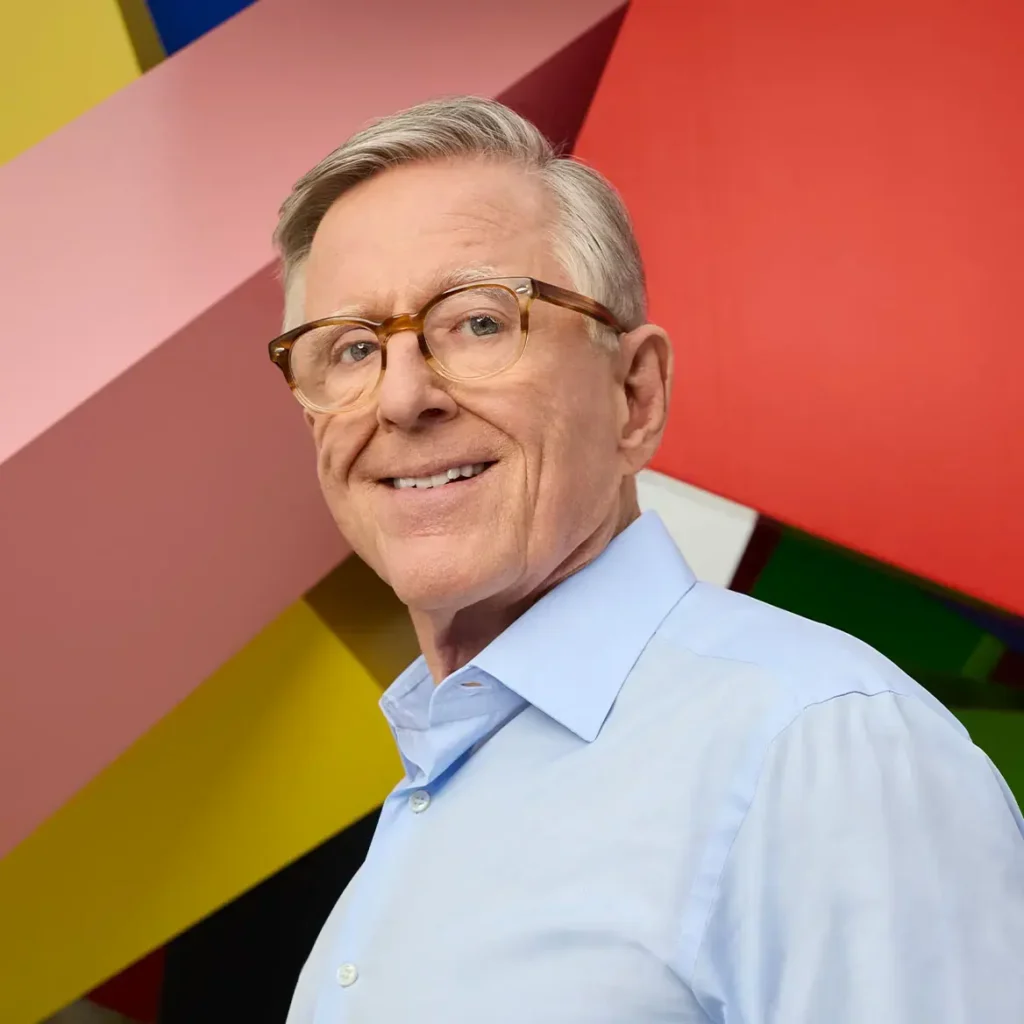
We’re excited about the September 1, 2026, launch of Stay Calm: Learn to Embrace Uncertainty in Investing and Life, by David Booth, Chairman and Co-Founder of Dimensional, our oldest strategic partner. Booth and St. Louis native Rex Sinquefield launched Dimensional in the early 1980’s as the first exclusively evidence-based fund company available to the public.
Clients and longtime followers will recognize the words in title because you’ve likely heard them come out of our mouths or read the words in these pages and client letters. Tune out the noise of today’s headlines. Focus on what you can control. And embrace the uncertainty of the market because that very uncertainty is precisely what will reward you as a long-term investor. Hence, it’s why we say: Take the Long View.
In Stay Calm, David shares the lessons, mindset, and stories behind the revolution that transformed investing from a game of speculation into a discipline grounded in evidence and long-term thinking.
Watch this space for details on an exclusive webinar with David Booth. Until then, read what the likes of Arnold Schwarzenegger, Barry Ritholtz, and Errol Morris are saying about Stay Calm below.
If you’re trying to instill more calm into your life, join our community or give us a call at 314-448-4023.
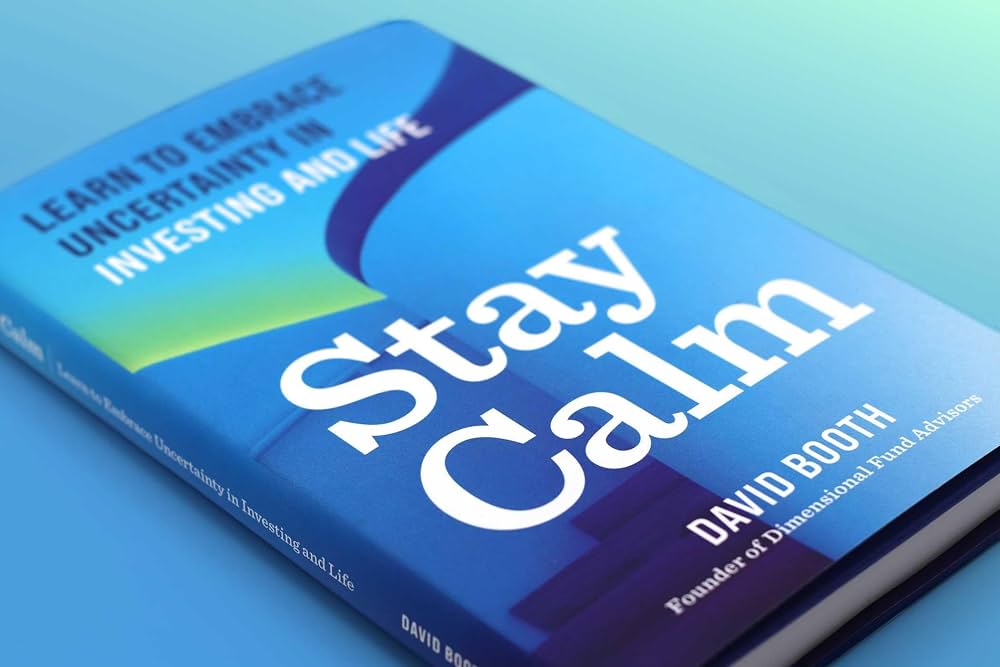
“Success—in anything, from fitness to business to investing—comes from discipline and patience, not chasing shortcuts. David Booth, who is a visionary and a great friend, reminds us that staying calm, loving the process, and focusing on what we can control is the real path to lasting results. This book is about building strength the smart way—over time.”
—Arnold Schwarzenegger, longtime Dimensional shareholder
“No one has done more to bring the SCIENCE of investing to the broader public than David Booth. His commitment to understanding markets—through deep, evidence-based, academic research—is unparalleled.”
—Barry Ritholtz, Chairman and Chief Investment Officer of Ritholtz Wealth Management
“There was a financial revolution in our time, brought about through a combination of computers, data collection, and theory. David Booth and the University of Chicago were at the center of it. Stay Calm is in part a chronicle of this financial revolution. But more relevantly, it’s a story about scientific principles of investing that shows how easy it is today for anyone to invest well.”
—Errol Morris, Academy Award®–winning filmmaker
Living Our Values: Reflections From Hill’s 2026 Summer Interns
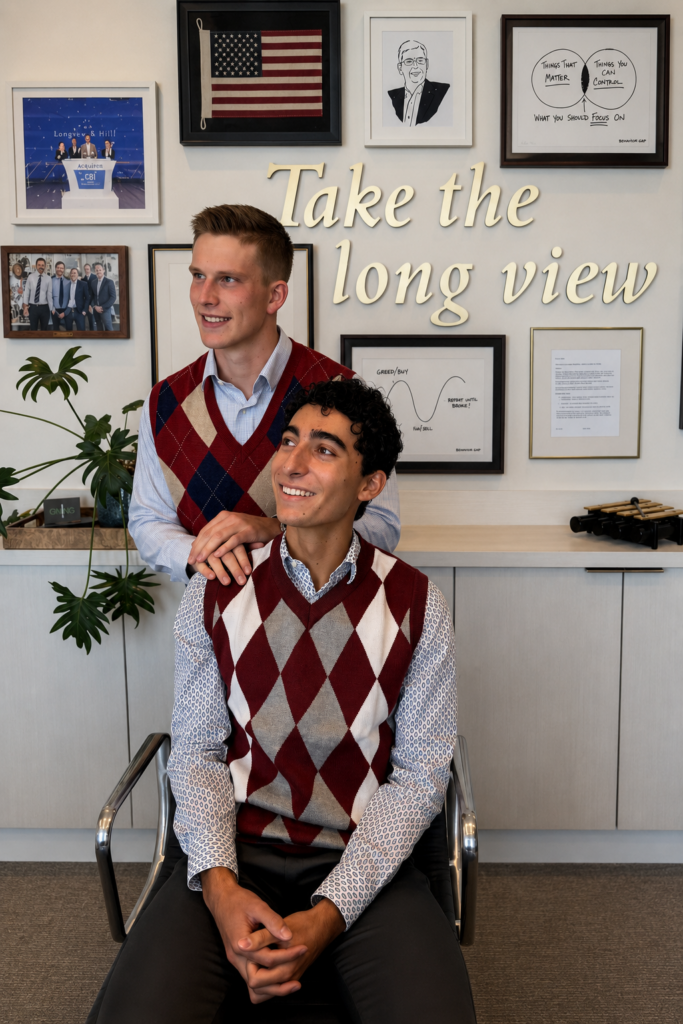
As their summer at Hill came to a close, we asked our interns to reflect on the lessons they’ll carry with them. Their answers touched on investing, leadership, relationships, and a few of the values that shape how we work together every day.
Arriving at Hill, I wanted to prioritize improving my communication to help me become a better leader. Communication channels are more fragmented than ever, and effective leadership increasingly relies on the ability to overcome these obstacles.
At Hill, I learned that candor means more than just vocalizing disagreements. By observing the leaders at Hill, it became obvious that some of the most difficult conversations can be the most fruitful.
The thing I admire most about the leaders at Hill is the way they are able to challenge each other, not to break each other down, but to build each other up. I plan to take this skill with me to help me become a more effective leader, both at work and beyond.
Before this summer, I thought investing was mostly about finding the right answer. At Hill, I learned that the better question is often why.
Every project taught me not to accept something just because that is how it has always been done. At Hill, the focus is on understanding why and asking, “What does the evidence support?”
But the most important lesson I will take away has less to do with investing and more to do with people. The work matters, but the people beside you shape how meaningful and enjoyable that work becomes.
At Hill, fun is not separate from business. It builds the trust, energy, and openness that allow people to do their best work together.
This summer taught me to seek evidence before reaching a conclusion, but it also taught me something even more valuable: when you surround yourself with the right people, meaningful work and fun naturally go together.