Signal vs. Noise: Stock Market Concentration Concerns
The Player or the House?
We’re in the Hospitality Business
Client-Exclusive Webinar with David Booth, Co-Founder and Chairman of Dimensional
A Good Estate Plan Should Make Life Easier
Author: Jack Gardner
Pay Yourself First

Is your cash working as hard as it could be? Many checking and savings accounts still pay very little interest. That’s why we recommend Flourish, a high-yield cash account for everyday cash and short-term savings (we use it ourselves, too). It keeps your money accessible while earning a competitive rate.
For a limited time: If you set up direct deposit into Flourish before the end of 2026, you’ll earn a boosted interest rate for your first 90 days. It costs nothing and only takes a few minutes to activate.
After the promotional period ends, your cash will continue to earn Flourish’s competitive standard rate rather than sitting in an account paying little or no interest.
At Hill, we believe the best financial strategies are often the simplest ones. Small changes like earning more on your cash and automating good financial habits can make a meaningful difference over time.
If you’d like help getting started with Flourish or setting up direct deposit, recurring transfers, and other automations, we’re happy to help. Please reach out to us.
What Happens When Good Ideas Spread
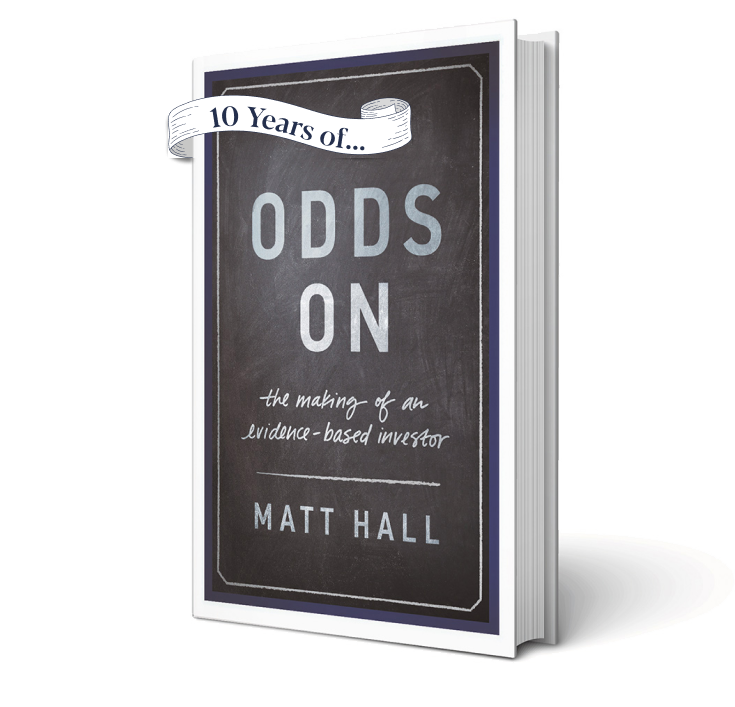
Ten years after Odds On was first published, Matt received a note from a fellow advisor that felt worth sharing.
Robert DeNovo, a private wealth advisor in Knoxville, wrote to say that he first came across the book through Dimensional, Larry Swedroe, or perhaps a recommendation that followed from both. However he found it, the impact stayed with him.
“Odds On, and later your podcast, was a catalyst to build a better experience for our clients. We, and they, are better for it.”
That says a lot.
Not because it is praise for the book, though we are grateful for that. It matters because it points to something bigger. The right ideas travel. They move from a book to a conversation, from one advisor to another, from a team meeting to a better client experience.
That was always the hope behind Odds On.
The book was written to make evidence-based investing easier to understand and easier to live with. It was never meant to be a technical manual. It was meant to help people see that a disciplined financial life does not have to be complicated. But it does require clarity, patience, and a willingness to let evidence guide the way.
Robert’s note also mentioned that when his team brought on a new associate, one of the first resources he shared was Matt’s podcast, especially the conversation with Danny Meyer. That detail felt fitting.
At Hill, we have always believed that the client experience matters as much as the advice itself. People need more than smart portfolios. They need a sense of calm. They need clear communication. They need a guide who helps them make better decisions when the stakes are high.
Odds On was never just about investing. It is about behavior, trust, and the kind of partnership that helps people stay focused on what matters.
Ten years later, it is meaningful to hear that those ideas still resonate with other advisors, with other teams, for other clients we may never meet. That is one of the best outcomes a book can have.
It keeps working.
It keeps traveling.
And, as Robert put it, people are better for it.
Thanks to Robert for allowing us to share his comments and for his support.
Jason Zweig Echoes a Familiar Theme: Discipline Over Drama
 We’ve been saying it for years, and it’s always nice to hear others—especially respected voices like Jason Zweig—reinforce the message.
In a recent Wall Street Journal column, Zweig highlights a subtle but costly mistake many investors are making right now: chasing what’s worked recently and ignoring timeless principles like diversification, discipline, and rebalancing.
He writes:
“You’re making predictions without even realizing it. And most of those predictions are probably wrong.”
Sound familiar?
Zweig’s advice mirrors the core of our evidence-based approach:
- Avoid making emotional or speculative moves
- Stick with a globally diversified plan
- Rebalance with purpose, not panic
This article is another reminder that resisting the urge to act on headlines is often the most powerful move an investor can make.