Signal vs. Noise: Stock Market Concentration Concerns
The Player or the House?
We’re in the Hospitality Business
Client-Exclusive Webinar with David Booth, Co-Founder and Chairman of Dimensional
A Good Estate Plan Should Make Life Easier
Category: Philosophy
We’re in the Hospitality Business
If you’ve spent much time in St. Louis or eaten your way around New York, you probably know the name Danny Meyer. The St. Louis native is behind some of New York’s most celebrated restaurants and, of course, Shake Shack.
I’ve been following Danny’s work for a long time. Years ago, I had him on my podcast to talk about his approach to hospitality. He was back home in St. Louis recently, and we sent several Hill team members to hear him speak. This week, I’m leading our team book club on Unreasonable Hospitality: The Field Guide by Will Guidara, who worked with Danny before going on to lead Eleven Madison Park.
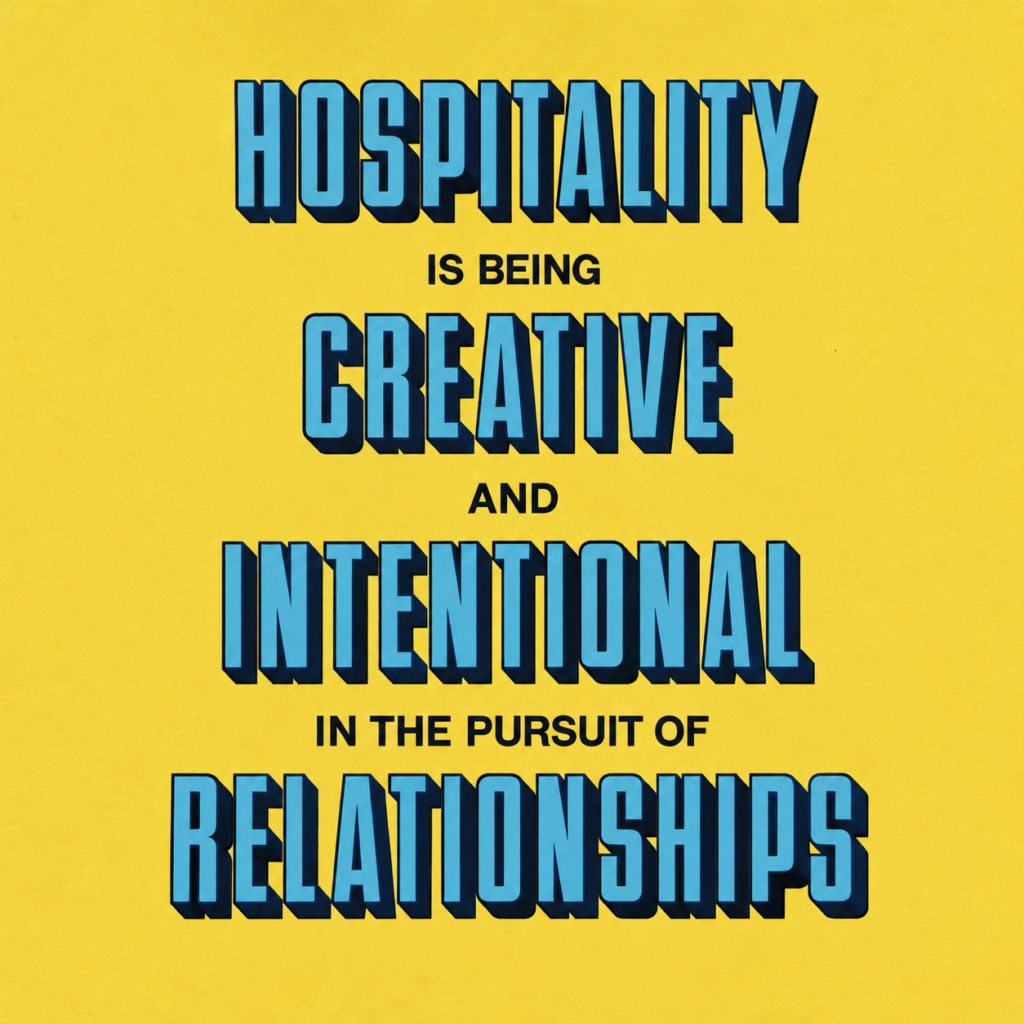
Why does an investment firm spend this much time studying people in the restaurant business? Because we’re in the hospitality business, too.
Danny has long made a distinction that has stuck with me: service is what you do. Hospitality is how you make people feel.
That idea isn’t new to Hill. When we founded the firm in 2005, we wanted to build something that felt different. Personal. Thoughtful. The kind of place where people knew your name, knew your family and cared about what was happening in your life.
At our best, we’ve done that for more than 20 years. But here’s something I’ve come to appreciate: culture isn’t enough if the experience depends on which person you happen to get.
For years, much of our hospitality came naturally from great people doing what great people do. As we’ve grown, we’ve realized we need to be more intentional. The standard can’t be that some people at Hill are exceptional at making clients feel known and cared for. It has to be the Hill standard.
So we’re working to turn something that has always been part of our culture into something more consistent and durable. We’re hiring for it. We’re teaching it. We’re talking about it. We’re rewarding it. And, importantly, we’re asking clients whether we’re actually delivering it.
This summer, we conducted our first comprehensive client survey. Nearly half of our client households participated, and the overall results were excellent. But two comments mattered more to me than any score.
One client told us Hill was the first financial advisor she’d ever had where she felt “truly seen and heard.”
Another told us, “I don’t have a sense that they know me know me.”
That’s hospitality in two sentences.
The first is what we’re trying to create. The second is a reminder that we don’t create it consistently enough yet.
Of course, none of this diminishes the importance of the actual advice. A great restaurant still needs great food.
For years, we’ve been obsessive about the investment side of the equation: evidence instead of prediction, reasonable costs, tax efficiency and thoughtful portfolios built around what someone is actually trying to accomplish. We still are.
But great investments are not the end goal. They’re in service of something bigger.
We want you to trust the plan enough that you don’t have to spend your life thinking about it. We want to understand what matters to you, anticipate what you might need and be there when life changes.
That’s the experience we’re trying to make more consistent.
Great hospitality shouldn’t depend on getting the right person on the right day. It should be something you can count on from Hill.
We’re not trying to become something different as we grow.
We’re trying to become more consistently who we’ve always wanted to be.
David Booth, Beyond the Numbers
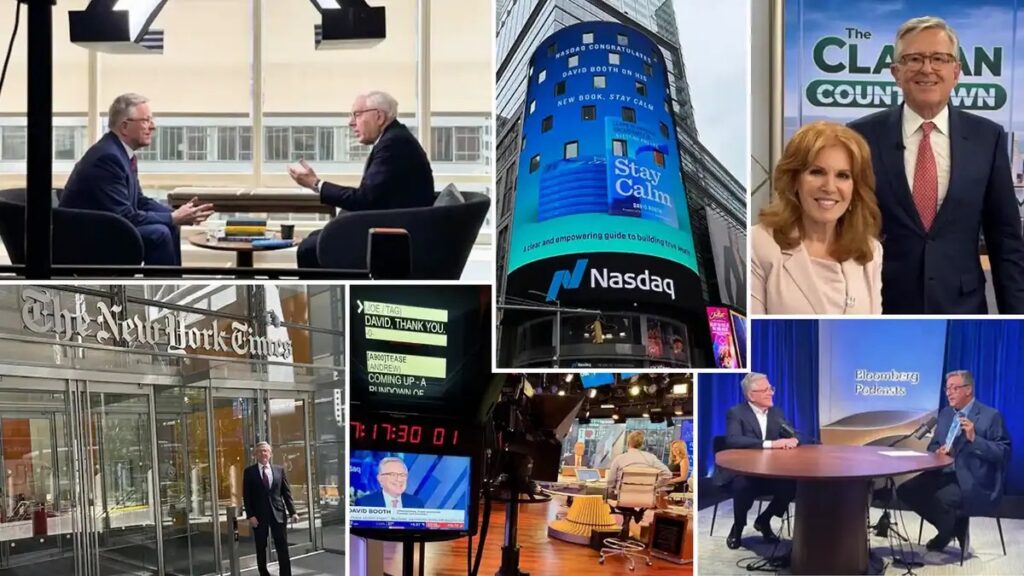
Last month, I wrote that David Booth’s new book, Stay Calm, would launch on September 1, and with a lot of travel planned, I thought I’d dig into the book before our November 10, 2026, webinar (see “Upcoming Events” below), with David.
As a long-time fan of Dimensional, our primary strategic investment partner, and someone who’s followed the firm and its founders since 1997, I thought I knew a lot about David Booth, Co-Founder and Chairman of Dimensional. I was wrong.
In addition to learning many more details about the confluence of timing, luck, and people coming together at the University of Chicago in the late 60’s and early 70’s, which led to the founding of the first, truly data and evidence-based investment firm in America, I learned about the person behind the numbers and what excites him beyond the science of investing.
In particular, David’s passion for philanthropy has grown along with his net worth, and he feels strongly about giving back. You can read the book yourself to learn the details of the specific dollar amounts, which are significant. However, the “why” is what’s interesting to me. His gift to the University of Chicago was a gift to provide thanks to the place that allowed him to learn so much and meet the people who would lay the foundation for, and join him in his future success. And David wanted to ensure that the opportunity remains for future students as well.
David is also a major art collector. But as he stated himself, “I don’t buy art as an investment. I buy it because I like it.” He goes on to say, “I like happy art, which means that when I walk by it, I smile. And I really love when other people see a piece of art and smile too.” That’s not what I expected to hear from someone who believes so strongly in “data & evidence” and rational thinking. That said, David goes on to explain how he asks himself many of the same questions he would use to evaluate an investment strategy, including “Is it likely to endure over time?” That sounds a lot like taking the long view.
The bigger lesson. David is a sharer. Upon his death, David intends to donate his 50+ acre estate and dozens of outdoor sculptures to the public. When David paid more than $2.5 million for the original “Rules of Basketball” (yes, the real, 13 hand-written rules as penned by Dr. James Naismith), he donated them to the University of Kansas, his undergraduate alma mater. The list goes on.
To learn the entire story, request a complimentary copy of Stay Calm by emailing Annie Hall at annie@hillinvestmentgroup.com. Keep reading to learn about our upcoming webinar!
Signal vs. Noise: Stock Market Concentration Concerns

Stop me if you’ve heard this before: The stock market is at record concentration levels. A handful of companies are driving market returns. There’s an AI bubble. FAANG stocks. The Magnificent Seven.
The names change, but the message is familiar. Today, much of the attention is focused on a handful of large technology companies at the center of the AI boom. Their strong performance has made them increasingly influential in the U.S. stock market, and the headlines can make it feel like investors need to do something about it.
The concentration is real. But before reacting to it, an evidence-based investor should step back, put on their Long View lens, and ask a more useful question: What does this actually mean for my portfolio?
The S&P 500 Has Become More Concentrated
Concentration, in investing terms, refers to how much of a portfolio is allocated to a particular stock, sector, country, or other category.
By almost any measure, the S&P 500 is considerably more concentrated today than it was a decade ago:
| Portfolio | Largest Sector Weight | Top Ten Companies Weight |
|---|---|---|
| S&P 500 | Technology – 38% | 38% |
| S&P 500 – 10 years ago | Technology – 20% | 19% |
Data as of June 30, 2026; June 30, 2016 for historical S&P 500.
That matters because concentration makes a portfolio more dependent on a smaller number of outcomes. When a handful of companies represent a large portion of your portfolio, unexpected news that changes the market’s expectations for those companies can have an outsized impact on your results.
But there is an important distinction: the S&P 500 is not your portfolio.
A Global Portfolio Looks Different
Hill Investment Group portfolios aren’t built around the 500 largest companies in a single country. They are built globally, with exposure to more than 14,000 companies across 47 countries.
That changes the picture meaningfully:
| Portfolio | Largest Sector Weight | Top Ten Companies Weight |
|---|---|---|
| S&P 500 | Technology – 38% | 38% |
| HIG Global Portfolio | Technology – 28% | 22% |
Data as of June 30, 2026.
Global diversification naturally reduces the portfolio’s dependence on any single company, sector, or country. The companies driving today’s U.S. market concentration are still there—we own them too—but they represent a smaller portion of the overall portfolio.
Diversification doesn’t mean avoiding the biggest or most successful companies. It means not making your financial future overly dependent on them.
If today’s technology leaders continue to thrive, HIG portfolios participate in that growth. If leadership shifts to different companies, sectors, or countries, we own those too. We don’t need to predict which outcome will occur.
HIG portfolios look much more like the global economy, deviating only when the evidence suggests that doing so can improve expected outcomes for investors.
Built for This Already
Your plan isn’t changing, because it doesn’t need to. Headlines about market concentration can make it feel like investors need to respond to something new. Diversification is one of the oldest ideas in evidence-based investing, and your portfolio has been built for markets like this one since the day we put it together.
Your portfolio includes thousands of companies across developed and emerging markets, large and small, spanning every sector of the global economy. It also leans toward companies with characteristics the evidence associates with higher expected returns: smaller companies, lower relative prices, and stronger profitability.
That structure isn’t designed around today’s headlines. It’s designed for a future we can’t predict.
When one part of the market performs particularly well, the portfolio systematically rebalances rather than allowing yesterday’s winners to dictate tomorrow’s allocation. When market leadership changes, the portfolio already owns the companies positioned to benefit.
That concentration story is real. It’s just about a portfolio built differently than yours.