Details Are Part of Our Difference
David Booth on How to Choose an Advisor
20 Years. 20 Lessons. Still Taking the Long View.
Making the Short List: Citywire Highlights Our Research-Driven Approach
The Tax Law Changed. Our Approach Hasn’t.
Bubble, Bubble, Bubble… Pop?

My 18-month-old son’s favorite song right now has a catchy chorus that goes, “Bubble, bubble, bubble… POP!” and as with any toddler favorite, we sing it constantly, so it’s always stuck in my head. Lately, every time I open my WSJ app and see the word “bubble” splashed across a headline, the soundtrack kicks in automatically.
In the song, the bubbles always pop. So, should we be preparing for a big pop in markets, as the headlines suggest? Part of taking the long view is refusing to react to headlines. Our philosophy centers on tuning out the noise and anchoring decisions in evidence. But with all the AI “bubble” chatter, it’s worth taking a moment to examine this idea from a research-backed point of view, one that might surprise you, but ultimately help you rise above the noise.
What If Bubbles Don’t Exist?
Eugene Fama, Nobel laureate and architect of the Efficient Market Hypothesis (and a major influence on Hill’s investment philosophy), has a view that stops people in their tracks: He doesn’t believe in bubbles.
Not because he thinks markets are perfect…they aren’t. And not because prices never fall…we know that they do. He challenges the idea of bubbles because, as he puts it, you can’t scientifically prove that a price was ‘wrong’ in the moment.
Here’s what this means:
1. We only call something a bubble in hindsight.
When prices rise sharply, no one knows if it’s irrational because future growth could justify it. We only label it a “bubble” after a drop, which means we’re using new information to judge old prices.
2. A crash isn’t evidence of a bubble.
A sharp decline doesn’t mean earlier prices were foolish. It may simply reflect changing expectations, new information, or shifting economic conditions.
3. If something looks obviously overpriced, markets should correct it.
Nobel Prize winner, University of Chicago Professor, and Dimensional Director Eugene Fama argues that calling something a bubble implies that most investors were collectively irrational, something he’s deeply skeptical of.
Whether or not you fully agree with him, his perspective matters because it reminds us of something essential: the story of markets is driven more by narrative and emotion than data.
How this Connects to Your Plan
At Hill, we don’t spend time predicting bubbles. We don’t try to guess where the top is. We don’t build your plan around today’s headlines. Instead, we build portfolios (and relationships) around a different set of ideas:
- Evidence beats emotion.
- Your financial life shouldn’t be swayed by headlines.
- And you don’t need to predict what comes next.
So, Are We in a Bubble? The honest, evidence-based, answer is that no one knows. And we don’t need to. The goal isn’t to call the top. It’s to stay invested, stay disciplined, and stay focused on your long-term vision, the one we’re building together.
If you’d like to talk more about this, call us or email at askanadvisor@hillinvestmentgroup.com to set up a time.
Disclosure:
Hill Investment Group Partners, LLC (HIG) is an SEC-registered investment adviser. Registration does not imply a certain level of skill or training. The information in this publication is for educational and informational purposes only and does not constitute an offer to sell, or a solicitation of an offer to buy, any specific securities, investments, or investment strategies. Nothing contained herein should be construed as individualized investment, tax, or financial advice. Always consult with a qualified financial adviser and/or tax professional before implementing any strategy discussed.
Investments involve risk, including the possible loss of principal. Past performance is not indicative of future results. Investment return and principal value will fluctuate so that an investor’s shares, when redeemed, may be worth more or less than their original cost. Future returns may differ significantly from past returns due to market and economic conditions, among other factors.
Sketches, Stories, and What Matters Most
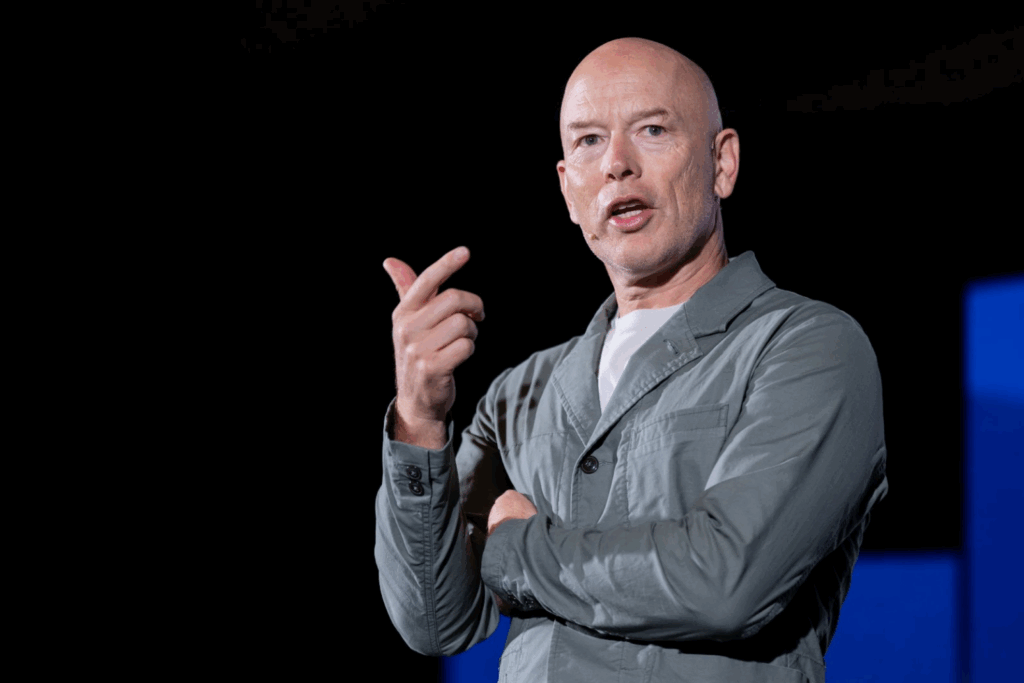
Every once in a while, an event reminds me just how much our work together matters. Our evening with Carl Richards was one of those moments…a room full of people opening up, reflecting, and reconnecting with what’s truly important.
A number of you joined us at the Racquet Club in St. Louis for a conversation that was part money, part meaning, and entirely human. Thank you for being there. And for those who couldn’t join in person, we felt your support from afar.
The energy in the room was palpable. People leaned in, shared openly, and allowed themselves to be moved. Since then, we’ve received thoughtful notes inspired by Carl’s sketches. It’s a reminder that a simple line, drawn with intention, can shift how we see our decisions and ourselves.
In my introduction that evening, I shared a story about meeting a couple on vacation whose wife was “famous to some.” That phrase describes Carl perfectly. He isn’t trying to be famous. He’s trying to be useful. Based on your reactions, he was.
The questions I asked Carl reflect the way we think at Hill Investment Group:
- What’s the story behind the sketches that make the complex simple without being simplistic?
- What feelings sit just below our financial decisions?
- How do we align the values we claim with the choices we make?
Carl reminded us that money is rarely the real topic. It’s a doorway into purpose and clarity.
My biggest takeaway from the evening is this:
At Hill Investment Group, our job is twofold. We help clients make the most of their capital, picking up every penny possible through evidence and disciplined implementation. And we help clients make the most of what matters in their lives through goal setting, accountability, and behavioral coaching.
We’ve been doing this work for 20 years, and we plan to keep doing it for 20 more, for a select group of long-view thinkers.
For those outside St. Louis, we want you to feel part of the experience too.
If you’d like a complimentary copy of Carl’s newest book, just email us and we’ll send one your way.
Here’s to a year ahead defined by gratitude, clearer choices, and deeper alignment between money and what matters most.
Take the Long View,
The Slow Things Still Win

The power of slowing down when everything around us says hurry.
I just finished Lonesome Dove (widely considered one of the greatest Westerns of all time). At 850 pages, it doesn’t move quickly, and that’s the point. You can’t rush it. You get pulled into the dust, the dialogue, the ache of it all.
Right after closing the book, I was on Mackinac Island. No cars, no horns. Just horse-drawn carriages, bikes, and time measured by the clop of hooves. Real horsepower! It’s one of the few places that forces a slowdown, and in that stillness, you actually start to notice things again – texture, tone, the weather moving through.
In investing, there’s no reliably fast way to get rich. We all know the parable of the tortoise and the hare, but modern life makes it so tempting to rush. The social media feed refreshes, the markets move, and it feels like we need to move too. It takes real discipline to slow down; to stick with something through the long, quiet stretches.
Fall feels like the right season to remember that. It’s a time of gratitude and reflection, of harvesting what we’ve grown, and of preparing the soil for what’s next.
Investing well isn’t about reacting to every market twitch. It’s about owning global capitalism, rebalancing patiently, and letting time compound the quiet and yet powerful work happening underneath the surface.
We’ve been at this long enough to see it firsthand. Our clients’ returns over the last 20 years, and more than 25 years if you go back to when we first started using this evidence-based approach, tell the story clearly. The discipline of staying invested, diversified, patient, and calm through every kind of market storm pays off.
In a world obsessed with speed, the slow things still win.
Take the long view.