Details Are Part of Our Difference
David Booth on How to Choose an Advisor
20 Years. 20 Lessons. Still Taking the Long View.
The Tax Law Changed. Our Approach Hasn’t.
Upcoming Webinar: Am I Actually Okay?
Tag: asset location
Tax Prep Support, Done Right.

Tax season comes with a lot of moving parts. A missing form, incomplete data, or a late reaction can cost you time and money. Our goal is simple: carry some of that load so you don’t have to.
At Hill Investment Group, we think about taxes all year, because after-tax outcomes matter. Taking the Long View means managing what you keep, not only what you earn.
What we do year-round
Tax awareness is built into the daily work behind your portfolio.
We place tax-heavy investments in the right accounts to reduce avoidable drag.
When the opportunity exists, we harvest losses to offset gains while keeping your strategy intact.
We lean on ETFs where appropriate, which tend to avoid the surprise capital gain distributions that show up in many mutual funds.
When cash flow, withdrawals, or charitable giving are part of your picture, we help coordinate the timing and structure so everything stays aligned with your plan.
What we do during tax season
Tax season should feel orderly. For clients where we manage the full relationship, we coordinate directly with your tax preparer, track form releases and revisions, and prepare a clean packet with the core reports your CPA needs.
No hunting through portals, no guessing which forms matter.
For clients earlier in their journey with us, many of these same principles are at work in how we manage your portfolio, and we’re always happy to point you in the right direction.
The goal, as always, is to make this easier for you.
What you still need to handle yourself
Some items live outside Hill, like W-2’s, old employer retirement plans, accounts held elsewhere, K-1s, and certain custodian forms.
Easy to miss items
- IRA Form 5498: Useful for keeping contribution and cost basis records accurate over time.
- HSA Form 1099-SA: Required if you took money out of an HSA.
- Qualified charitable distributions: Your 1099-R will not label a QCD for your CPA. However, if we facilitated it, we would help send a list to your CPA.
If you want to talk through tax planning as part of your broader plan, reach out to us at service@hillinvestmentgroup.com.
A Thoughtful Portfolio Enhancement with Planning Benefits
Every February, I open one envelope with unusual curiosity: my 1099 from our custodian. It shows how much “income” my investments produced last year.
As an investor, I appreciate what that number represents. As a taxpayer, I also know what comes next: plugging it into a projection and watching how it changes what we’ll owe in April.
For me, it’s manageable. I’m still early in my career, and my portfolio is mostly stocks. But for many of the families we serve at Hill, this number can grow large enough that it doesn’t only affect their tax return — it starts to affect their entire financial plan.
And historically, there hasn’t been much we could do about it… until now.
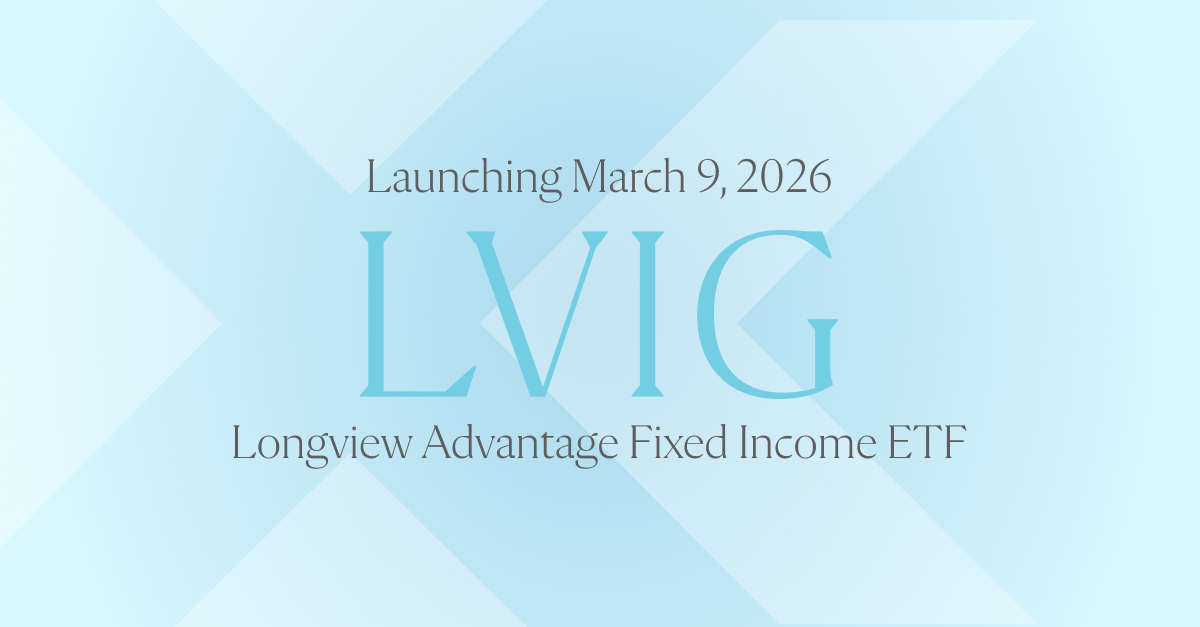
Longview Advantage Fixed Income ETF (LVIG) is an ETF from our research partner, Longview Research Partners. Its aim is to solve a part of planning we historically could not control: Traditional bond investments generate taxable income whether you need it or not.
LVIG is built to avoid those automatic income distributions. Meaning more of the return stays inside the portfolio, which gives us control over how income shows up in your plan.
Like EBI, LVIG will be used inside Hill’s models. It may not be noticeable for younger, equity-heavy investors today. But as portfolios shift over time toward a higher allocation of fixed income, LVIG becomes a meaningful planning tool as well as an outstanding investment.
- Roth IRA conversions: Less portfolio income means more flexibility to convert traditional Individual Retirement Accounts (IRAs) to Roth IRAs during lower-income years.
- Asset location: We can comfortably hold fixed income in taxable accounts and reserve IRA and Roth space for equities, where long-term growth benefits most.
- Medicare and income cliffs like IRMAA (Income-Related Monthly Adjustment Amount), NIIT (Net Investment Income Tax), AMT (Alternative Minimum Tax): Keeping income lower makes it easier to stay below thresholds that trigger higher premiums and additional taxes.
- Trust planning: Trusts hit top tax brackets more quickly than individual tax brackets. Therefore, minimizing ordinary income allows trustees to distribute based on need, not tax pressure.
- Estate planning and step-up in basis: More return remains to compound as unrealized growth that may receive a step-up for heirs instead of getting taxed each year.
- Capital gains control: Lower income gives us more favorable opportunities to harvest gains at lower tax rates.
- Retirement cash flow: We can create distributions intentionally by selling shares at long-term capital gains tax rates rather than generating unpredictable taxable income.
Most of these benefits become especially impactful for clients who are retired or approaching retirement, have large taxable portfolios, are doing Roth conversions, have trusts, or are mindful of Medicare premium thresholds.
For younger clients, this may feel less important today. But over time, as allocations shift toward bonds, it becomes one of the more impactful planning levers available.
This is a good example of the subtle but powerful improvements we like making for clients at Hill Investment Group. Changes that not only improve your investment outcomes, but also make your plan work better behind the scenes.
While LVIG is something we are bringing to Hill portfolios, it will be a publicly traded ETF and available to all investors. Therefore, if you know someone navigating retirement, taxes, or trust planning who could benefit from greater flexibility, feel free to share this with them or have them reach out to us directly to see how we can be most helpful. Here’s the best link to get in touch with us.
Tax-Wise Planning Never Goes Out of Season

There are many aspects of wealth management we cannot control. Tax codes evolve. Global events come and go. The markets will go up and down. By carefully minimizing taxes due, we can exert an important degree of control over maximizing end returns – the kind you get to keep as your own.
It starts with our annual tax packets. Each year, we aggregate our clients’ Form 1099s from Schwab, and deliver them to their tax professionals for timely and efficient tax-filing.
That’s just one small thing. We are working all year round to help our clients keep a lid on their taxes due. Below are additional examples:
- Asset Location: Locating the most tax-efficient holdings in taxable accounts, and the least tax-efficient holdings in tax-deferred or tax-free accounts, to minimize a portfolio’s overall taxes due.
- Tax-Loss Harvesting: Acting on opportunities to reduce taxes through tax-loss harvesting when appropriate.
- Tax-Managed Funds: In taxable accounts, using tax-managed funds whenever possible, to reduce the capital gains and dividends that fund managers must pass on to shareholders.
- Tax-Favored Accounts: Helping clients establish tax-favored IRAs, 529 plan accounts, Healthcare Savings Accounts (HSAs) and similar accounts as appropriate.
- Charitable Giving: Helping clients shift their tax-wise charitable giving plans following the Tax Cuts and Jobs Act of 2017. For example, implementing Donor Advised Funds and Qualified Charitable Distributions when appropriate.
- Estate Planning: Collaborating with clients’ estate planning and insurance professionals to consider advanced planning strategies for minimizing and covering taxes due upon estate transfer.
So, this spring – or any time of year – let us know if you’d like to explore how you might increase your overall wealth by decreasing your taxes due.