Details Are Part of Our Difference
Embracing the Evidence at Anheuser-Busch – Mid 1980s
529 Best Practices
David Booth on How to Choose an Advisor
The One Minute Audio Clip You Need to Hear
Tag: investment philosophy
A Timely Reminder to Keep Going
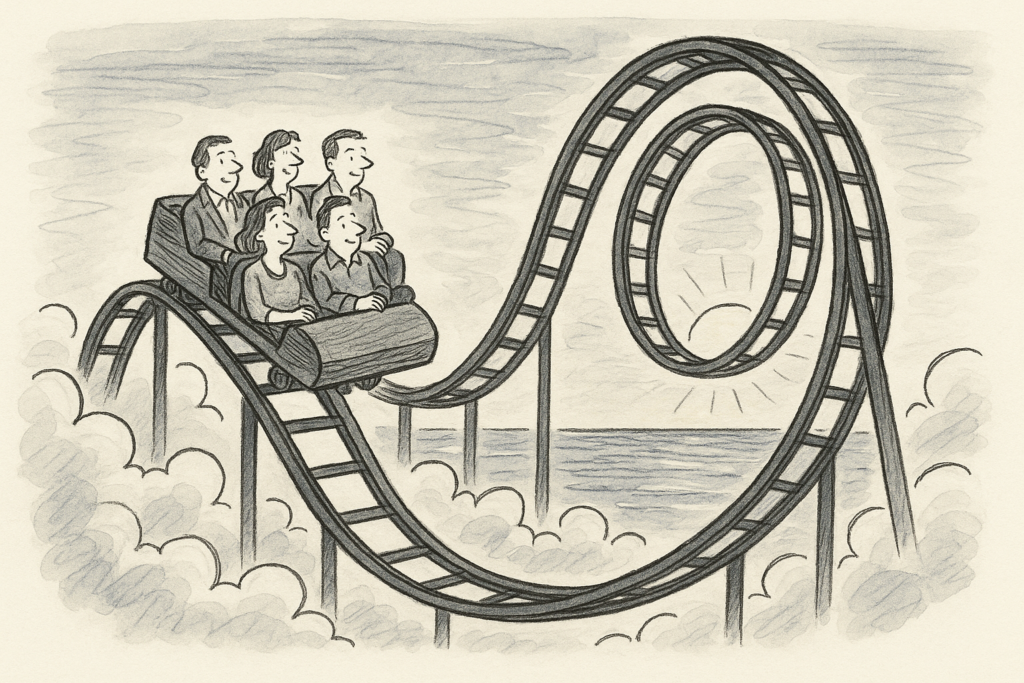 Market volatility is back in the headlines, and if you’re feeling uneasy, you’re not alone. Over the past month, markets have given us another sharp reminder of what it means to be an investor. On April 2nd and 3rd, the S&P 500 fell a combined 10.7%—a drop that understandably triggered anxiety for some. And just when the idea of sitting on the sidelines might have felt tempting, the market turned on a dime. On April 9th, the S&P 500 gained 10.5% in a single day, quickly recapturing much of the prior decline.
That’s the market. It moves. Sometimes violently. In hourly bursts. Often unpredictably. And always in response to new information.
One of the best examples of this came on April 9th at 1:18 p.m. Eastern, when President Trump posted on Truth Social that he would lift tariffs on all countries other than China. Within ten minutes of that post, the S&P 500 had surged nearly 6%. Markets are incredibly efficient at digesting new information, whether it’s about trade policy, inflation, interest rates, or elections. The current price of a security reflects the consensus expectations of millions of participants, each with skin in the game.
So what should you do in the face of this kind of uncertainty?
Stick with your plan.
At Hill Investment Group, every client portfolio is built around a long-term strategy, not short-term noise. Your plan was designed with the understanding that markets will experience sharp moves, both up and down. We don’t pretend to know what tomorrow’s headlines will be or how the market will respond to them. What we do know—based on decades of data and mountains of research—is that markets are priced to deliver a positive expected return every single day. That’s why being in the market is so critical.
Missing just a handful of the best days has an outsized impact on long-term results. And as we just saw, those days often come immediately after the worst ones. Getting out and waiting “until the dust settles” may feel comforting, but it’s rarely profitable.
Global diversification is also part of the plan.
This year offers a good reminder of why. While the S&P 500 is down 9.7% year-to-date as of April 22nd, international developed and emerging markets are actually up 6.3%. No one can consistently predict which areas of the market will outperform in the short term. That’s why we build portfolios that don’t rely on a single country or asset class to deliver returns. Diversification ensures that when one area of the market struggles, others may pick up the slack. It’s not just about reducing risk—it’s about improving the odds of long-term success.
Instead of reacting to volatility, we encourage our clients to focus on what can be controlled—things that actually add value:
- Tax Loss Harvesting – When markets decline, we actively harvest losses to offset gains elsewhere in your portfolio. This reduces your tax bill while keeping you invested.
- Rebalancing – We monitor portfolios to ensure your exposure to risk remains aligned with your plan, buying when assets are down and trimming when they’ve run up.
- Staying the Course – Most importantly, we help you stay focused on the big picture. Financial goals aren’t achieved in a week or a month—they’re met over years and decades by maintaining discipline and a long-term perspective.
Trying to respond to every market move or every tweet is not an investment strategy. It’s gambling. It’s a recipe for regret.
So yes, volatility has returned. And no, we can’t predict what comes next. But we can control how we respond. And our response is grounded in evidence, backed by decades of research, and aligned with your goals.
We’re here to help you take the long view. That’s not just a tagline—it’s a philosophy that has helped our clients build and preserve wealth through all kinds of markets. And it’s one we continue to believe in today.
Stick with it.
Hill Investment Group is a registered investment adviser. Registration of an Investment Advisor does not imply any level of skill or training. This information is educational and does not intend to make an offer for the sale of any specific securities, investments, or strategies. Investments involve risk, and past performance is not indicative of future performance.
Why Presidential Elections Don’t Really Matter for Your Stock Market Return
Every four years, the United States gets consumed by the frenzy of presidential elections. It’s everywhere: TV, social media, and the minds of investors. Whether you’re on Main Street or Wall Street, the speculation about how the market will react to the latest poll or debate is impossible to escape. But there’s a simple truth that often gets lost in the noise—which political party is in office has little effect on the stock market.
For all the headlines and heated debates, historical data tells a clear story: a 60/40 portfolio has delivered average annual returns of around 8%, regardless of which party holds the White House. On top of that, election years are no different from non-election years. Although stock markets can show volatility during election years, and that can be uncomfortable, it doesn’t tell the whole story. Market returns during election years have also historically averaged 8%.
One of the most important lessons for long-term investors is that reacting to short-term political news is rarely a good idea. Trying to time the market based on election outcomes can lead to costly mistakes. Studies consistently show that missing just a few of the market’s best days—many of which often come after periods of volatility—can dramatically reduce your long-term returns.
For example, take this headline from Bloomberg back in 2022 predicting a 100% chance of a US Recession within a year.
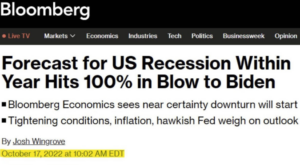
For those keeping score the S&P 500 is up 61% as of 9/30/24 since that article came out.
Instead, the better course of action is often to stay invested. The stock market is priced at positive expected returns. In other words, over the long run, stocks are expected to grow in value. The market’s historical average return of 8% reflects this.
If you stay invested through election cycles, avoiding the temptation to sell or make drastic changes based on who wins or loses, you’re more likely to capture those long-term returns.
Whether it’s a blue wave, a red surge, or a contested result, research shows none of it changes the fundamental rules of investing. Stick to your plan, and let time—and the market’s resilience—work in your favor. Presidential elections come and go, but the market’s ability to deliver positive long-term returns remains.
Hill Investment Group is a registered investment adviser. Registration of an Investment Advisor does not imply any level of skill or training. This information is educational and does not intend to make an offer for the sale of any specific securities, investments, or strategies. Investments involve risk, and past performance is not indicative of future performance. Consult with a qualified financial adviser before implementing any investment or financial planning strategy.
June Newsletter Intro

Dear Friends and Clients,
I know it’s obnoxious to put a big ad of yourself in the introductory comments, but I’m hoping it captured your attention. I’m sharing it because it’s a new print advertisement in which I am featured, along with a sentiment that speaks to the core of our firm. This month, we celebrated our 19th birthday as an organization, a milestone that has been possible because of your unwavering support and trust. It’s a journey that got me thinking about our shared growth and success.
When we contemplated starting Hill Investment Group 20 years ago, our primary question was: What would it be like if we went back to the basics and focused on fewer clients and deeper relationships? Tom Cruise asked the same question in his Academy-nominated performance as Jerry McGuire (here is Jerry’s Mission Statement).
I’m unsure how Jerry’s next twenty years worked out, but the answer has been a steady path of progress and prosperity for us. We’ve built lasting relationships and guided our clients through various market cycles by prioritizing personalized service and evidence-based investing. This is what started us and is who we are today. Your trust and support in taking the long view have been integral to our success.
Here’s to many more years of focusing on what matters most!
Matt