 In 1999, a book changed the direction of my life.
At the time, I had recently dropped out of law school and was trying to figure out what was next. I was in that phase of life where you have plenty of energy and curiosity, very little skill, and a strong desire to do something meaningful that helps other people.
Around that time, I met Larry Swedroe.
Larry had written a book called The Only Guide to a Winning Investment Strategy You’ll Ever Need. I still remember sitting down with it and realizing that the first 100- pages quietly reshaped how I thought, not just about money and investing, but about what I wanted to do in my professional life. The approach felt more like a calling than a job.
Until then, I thought investing was about forecasts, predictions, and confident opinions about the future. Larry’s work introduced me to something very different. It was grounded in data and evidence. It showed that humility, discipline, and a long-term perspective were far more powerful than trying to outguess markets and pick winners.
It felt logical, rational, and deceptively simple to me. It smelled like the truth. And I loved it.
That realization set me on a course that eventually led to the creation of Hill Investment Group.
Years later, when we started the firm, I ran into an unexpected problem. We would give clients books like Larry’s because the ideas were so important, and we wanted them to understand our approach at a deeper level. Unfortunately, many people simply wouldn’t read them. Not because the books weren’t good. They were excellent. However, they were technical and written primarily for professionals rather than investors.
This dilemma got me thinking…and searching. I wanted something that could open the door a little wider for readers. Something relatable, understandable, memorable, and useful.
So I tried an experiment.
Instead of writing a technical guide, I “buried the vegetables” inside a story.
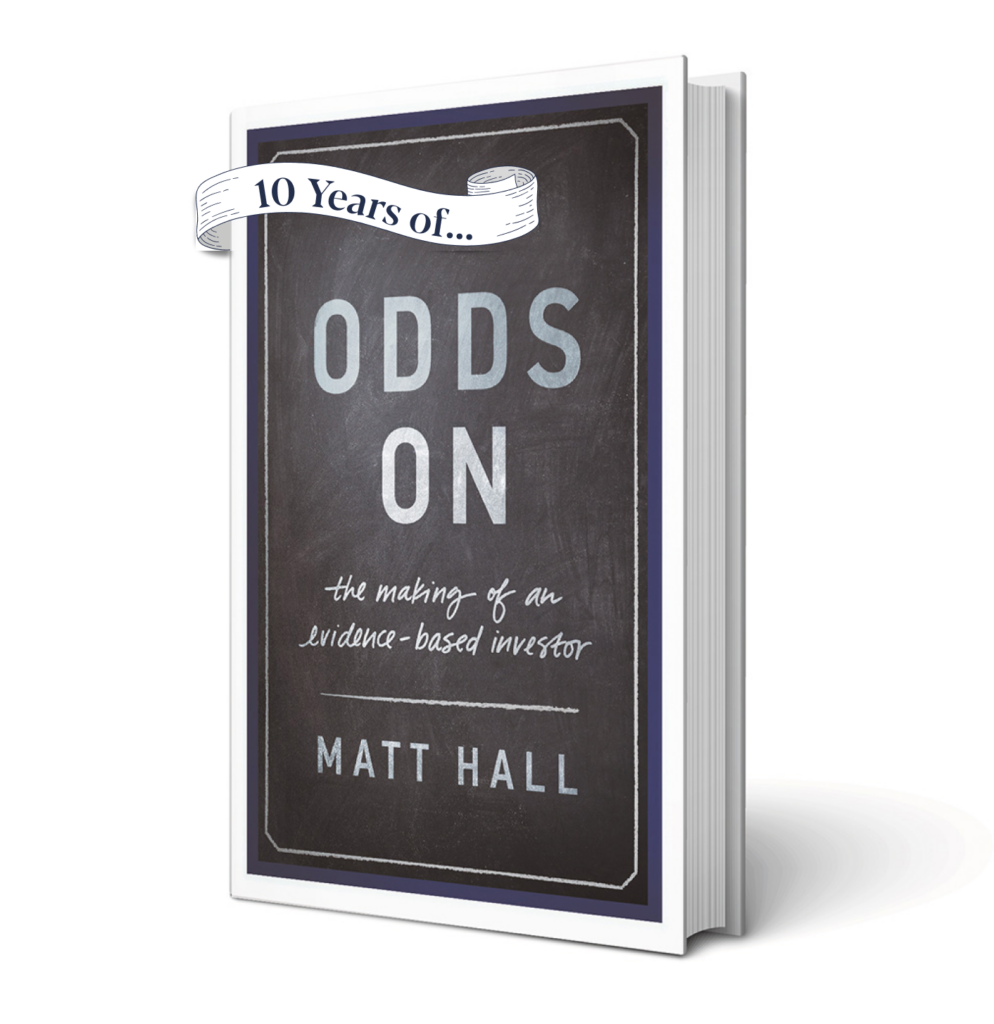
The result was Odds On: The Making of an Evidence-Based Investor. It follows my own coming of age in the investment world, where readers encounter the mentors, lessons, and ideas that shaped the philosophy behind our firm.
A few years after the book came out, I attended a book party on Park Avenue in New York surrounded by other authors. I struck up a conversation with a writer who had created a popular series of illustrated books. After listening to the story of why I had written Odds On, he paused and said something that stuck with me.
I had never heard the phrase before, so he explained.
The first ring develops the idea. The second ring takes that idea and translates it so a broader audience can understand it.
That description felt exactly right.
Larry was part of the first ring. His work changed how I saw investing. Odds On was my attempt to carry those ideas outward in a way that more people could absorb. More real investors, not just practitioners.
When the manuscript first circulated, a few agents told me the book would fail. It wasn’t prescriptive enough. I was warned that most non-fiction business books go nowhere and help no one, especially if the author does not already have a significant following.
Twelve years after writing it and ten years after publication, the story has been far more powerful and interesting than I ever imagined.
The book has traveled widely. It has been read by students, investors, and advisors across the country. It eventually made its way to the Netherlands, where it was translated into Dutch. Along the way, it sparked conversations, friendships, podcast interviews, speaking invitations, and thoughtful notes from readers around the world.
In many cases, the book became the first handshake between us.
Some readers eventually became clients. Some became collaborators and friends. Some changed the investing philosophy of their entire firm. A few even joined our team.
And in a way, the book changed my life too. Not because of copies sold or opportunities created, but because of the relationships that have grown out of it. Over the years, we’ve received more trust, gratitude, and kindness from long-time clients than I ever imagined possible. Compliance rules prevent us from sharing testimonials, but I can say this: the real riches have come from the people.
What began as an attempt to explain a philosophy ended up creating something much more meaningful: a community of people who believe in taking the long view.
Ideas move through rings. Someone discovers them. Someone translates them. Eventually, someone passes them forward.
That ripple effect is what we’re celebrating in this month’s journal.
Ten years after publication, we’re looking back at the journey of Odds On — the ideas behind it, the unexpected places it traveled, and the people it connected us with along the way.
And if the ideas resonate with you, perhaps the next ring starts with something simple: share the book with someone who might benefit from it.
Take the long view,
Matt Hall