Signal vs. Noise: Stock Market Concentration Concerns
The Player or the House?
We’re in the Hospitality Business
Client-Exclusive Webinar with David Booth, Co-Founder and Chairman of Dimensional
A Good Estate Plan Should Make Life Easier
Tag: investor behavior
New Year. Same Markets. Better Media Diet.
If you want a resolution that will actually help your investing life in 2026, start here: clean up your media diet.
Not because we’re suggesting you avoid reality or pretend the world is calm. We mean something more practical: be ruthless about who gets access to your attention and what they’re trying to do with it.
Most financial media isn’t designed to help you invest well. It’s designed to keep you watching. So…
Everything is urgent.
Everything is breaking.
Everything is either a bubble or a collapse.
And the “right move” is always: stay tuned.
Your long view plan runs on a different fuel. It’s built on evidence, diversification, and the actual life you’re trying to fund. It’s built on what lasts, not what trends.
The best long view investors are not the ones consuming the most content. They are the ones protecting their attention, staying consistent, and making changes only when the facts change.
A simple filter for 2026:
Before you read or watch anything money-related, ask:
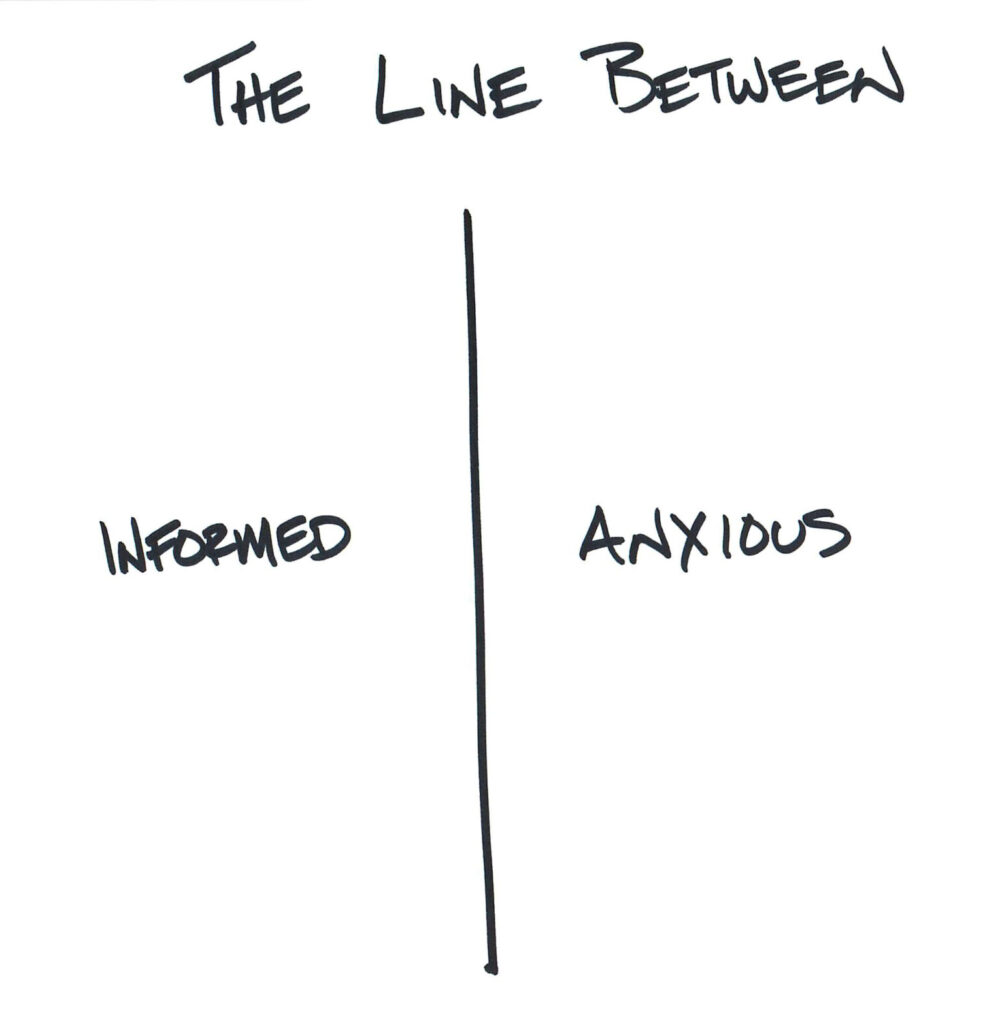
“How is the author trying to make me feel?”
If the answer is “anxious,” close the tab. Move on.
Attention is a financial asset. Treat it like one.
Hill Investment Group Partners, LLC (HIG) is an SEC-registered investment adviser. Registration does not imply a certain level of skill or training. The information in this publication is for educational and informational purposes only and does not constitute an offer to sell, or a solicitation of an offer to buy, any specific securities, investments, or investment strategies. Nothing contained herein should be construed as individualized investment, tax, or financial advice. Always consult with a qualified financial adviser and/or tax professional before implementing any strategy discussed.
Investments involve risk, including the possible loss of principal. Past performance is not indicative of future results. Investment return and principal value will fluctuate so that an investor’s shares, when redeemed, may be worth more or less than their original cost. Future returns may differ significantly from past returns due to market and economic conditions, among other factors.
Bubble, Bubble, Bubble… Pop?

My 18-month-old son’s favorite song right now has a catchy chorus that goes, “Bubble, bubble, bubble… POP!” and as with any toddler favorite, we sing it constantly, so it’s always stuck in my head. Lately, every time I open my WSJ app and see the word “bubble” splashed across a headline, the soundtrack kicks in automatically.
In the song, the bubbles always pop. So, should we be preparing for a big pop in markets, as the headlines suggest? Part of taking the long view is refusing to react to headlines. Our philosophy centers on tuning out the noise and anchoring decisions in evidence. But with all the AI “bubble” chatter, it’s worth taking a moment to examine this idea from a research-backed point of view, one that might surprise you, but ultimately help you rise above the noise.
What If Bubbles Don’t Exist?
Eugene Fama, Nobel laureate and architect of the Efficient Market Hypothesis (and a major influence on Hill’s investment philosophy), has a view that stops people in their tracks: He doesn’t believe in bubbles.
Not because he thinks markets are perfect…they aren’t. And not because prices never fall…we know that they do. He challenges the idea of bubbles because, as he puts it, you can’t scientifically prove that a price was ‘wrong’ in the moment.
Here’s what this means:
1. We only call something a bubble in hindsight.
When prices rise sharply, no one knows if it’s irrational because future growth could justify it. We only label it a “bubble” after a drop, which means we’re using new information to judge old prices.
2. A crash isn’t evidence of a bubble.
A sharp decline doesn’t mean earlier prices were foolish. It may simply reflect changing expectations, new information, or shifting economic conditions.
3. If something looks obviously overpriced, markets should correct it.
Nobel Prize winner, University of Chicago Professor, and Dimensional Director Eugene Fama argues that calling something a bubble implies that most investors were collectively irrational, something he’s deeply skeptical of.
Whether or not you fully agree with him, his perspective matters because it reminds us of something essential: the story of markets is driven more by narrative and emotion than data.
How this Connects to Your Plan
At Hill, we don’t spend time predicting bubbles. We don’t try to guess where the top is. We don’t build your plan around today’s headlines. Instead, we build portfolios (and relationships) around a different set of ideas:
- Evidence beats emotion.
- Your financial life shouldn’t be swayed by headlines.
- And you don’t need to predict what comes next.
So, Are We in a Bubble? The honest, evidence-based, answer is that no one knows. And we don’t need to. The goal isn’t to call the top. It’s to stay invested, stay disciplined, and stay focused on your long-term vision, the one we’re building together.
If you’d like to talk more about this, call us or email at askanadvisor@hillinvestmentgroup.com to set up a time.
Disclosure:
Hill Investment Group Partners, LLC (HIG) is an SEC-registered investment adviser. Registration does not imply a certain level of skill or training. The information in this publication is for educational and informational purposes only and does not constitute an offer to sell, or a solicitation of an offer to buy, any specific securities, investments, or investment strategies. Nothing contained herein should be construed as individualized investment, tax, or financial advice. Always consult with a qualified financial adviser and/or tax professional before implementing any strategy discussed.
Investments involve risk, including the possible loss of principal. Past performance is not indicative of future results. Investment return and principal value will fluctuate so that an investor’s shares, when redeemed, may be worth more or less than their original cost. Future returns may differ significantly from past returns due to market and economic conditions, among other factors.
Six Ways to Tell the Difference Between Real and Pretend Investors

The following is a piece former podcast guest and New York Times Columnist, Carl Richards wrote for his newsletter. We enjoyed his humorous take on “pretend” investors.
Pretending to be an investor is dangerous. It’s not like when you were a kid pretending to be a superhero. That’s because kids generally know better than to confuse “make-believe” for reality. It’s pretty rare that a child jumps off the roof because they actually think they can fly.
But when it comes to investing, adults confuse “make-believe” and reality all the time.
Don’t you think it’s time we grow up a little?
Here are six ways to tell the difference between real and pretend investors to help get started.
…
- Pretend investors think that financial pornography is real, and therefore, the news ticker scrolling across the television screen represents actionable information.
Real investors know it might be entertaining, like going to the circus. But they would never make a decision because of it.
- Pretend investors think it makes perfect sense to change their investments based on what they hear in the news: There’s a new president, so act! He doesn’t like the Federal Reserve, so trade! He criticized bankers, so buy bank stocks!
Real investors make changes to their investments based on what happens in their own lives. If their goals change or there is a fundamental change in their financial situation, then they consider making a change in their investments. But they would never make a change based on someone yelling “buy” or “sell” on a Financial Pornography Network.
- Pretend investors think they need to monitor their investments all the time. (The little supercomputer they carry around in their pockets makes it so easy!)
Real investors know it takes a long time for a tree to grow, and it will not help to dig it up to see if the roots are still there. The same rule applies to investments.
- Pretend investors talk about their investments—a lot. They say things like, “I’m long this, or short that.” They use jargon that often does not make sense, though it sounds kind of impressive if you don’t listen too closely. Sometimes they cheer for things like increased consumer spending, higher unemployment, or in some cases, even war.
Real investors understand the difference between the global economy and their personal economy, and choose to focus on the latter.
- Pretend investors worry endlessly about the news in some far-off part of the world and the impact that news will have on their portfolio.
Real investors focus on the things they can control, like saving a bit more next year, keeping their investment costs low, not paying fees unless it’s necessary, and managing their behavior by not buying high and selling low.
- Pretend investors complain endlessly about volatility in the markets, and focus on days.
Real investors are focused on enjoying the benefits of the returns the market generates over decades.
…
Look, if it feels like I’m getting in your face a little, it’s because I am.
But I’m doing it for you!
Jumping off the roof because you think you can fly can have disastrous consequences… it just so happens, so can throwing around your money because you think you know how to invest.
If any of the six items in bold above sound like you… you may want to think about what it means to be a real investor.
Or just jump off that roof, and see what happens.