Signal vs. Noise: Stock Market Concentration Concerns
A New Book, A Familiar Message: Stay Calm
The Freedom to Choose What Comes Next
Living Our Values: Reflections From Hill’s 2026 Summer Interns
The Player or the House?
Tag: Matt Hall
What Happens When Good Ideas Spread
Ten years after Odds On was first published, Matt received a note from a fellow advisor that felt worth sharing.
Robert DeNovo, a private wealth advisor in Knoxville, wrote to say that he first came across the book through Dimensional, Larry Swedroe, or perhaps a recommendation that followed from both. However he found it, the impact stayed with him.
“Odds On, and later your podcast, was a catalyst to build a better experience for our clients. We, and they, are better for it.”
That says a lot.
Not because it is praise for the book, though we are grateful for that. It matters because it points to something bigger. The right ideas travel. They move from a book to a conversation, from one advisor to another, from a team meeting to a better client experience.
That was always the hope behind Odds On.
The book was written to make evidence-based investing easier to understand and easier to live with. It was never meant to be a technical manual. It was meant to help people see that a disciplined financial life does not have to be complicated. But it does require clarity, patience, and a willingness to let evidence guide the way.
Robert’s note also mentioned that when his team brought on a new associate, one of the first resources he shared was Matt’s podcast, especially the conversation with Danny Meyer. That detail felt fitting.
At Hill, we have always believed that the client experience matters as much as the advice itself. People need more than smart portfolios. They need a sense of calm. They need clear communication. They need a guide who helps them make better decisions when the stakes are high.
Odds On was never just about investing. It is about behavior, trust, and the kind of partnership that helps people stay focused on what matters.
Ten years later, it is meaningful to hear that those ideas still resonate with other advisors, with other teams, for other clients we may never meet. That is one of the best outcomes a book can have.
It keeps working.
It keeps traveling.
And, as Robert put it, people are better for it.
Thanks to Robert for allowing us to share his comments and for his support.
What Odds On Set in Motion
When Matt told me he was writing a book, I supported him.
I also wasn’t sure what would come of it.
We had always believed in what we were doing. We had great clients. We were growing. We were already sharing our philosophy with the people we worked with. Part of me wondered if we really needed a book at all.
But Matt felt strongly about it. He wanted to put something out into the world that might help people see things more clearly. So we backed him.
The first line of the book was, “I want this book to change your life.”
That is a big statement. At the time, I didn’t know what to make of it. Turns out, that Odds On is unique – it is not only informative about investing, but it is also engaging on so many other levels.
Over the last ten years, we’ve kept notes from people who read it. Clients, advisors, students, friends, and plenty of people we had never met. Reading back through them now, what stands out is not that people liked the book.
It’s what they did after they read it.
- “I was completely engaged from the first paragraph and couldn’t put it down.”
- “I did not take one break from reading until I was finished, simply because I did not want to put it down.”
Some people found clarity.
- “I was up until after midnight reading your book, and it changed my entire perspective on investing strategies.”
- “Until I picked up your book, I was losing hope for our profession. Your book gave me a much needed breath of fresh air.”
- “We are gradually converting all our existing clients and spreading the word to others in our office.”
- “I found your story so inspiring that I am seriously thinking of leaving my current job to start something new.”
And some of the most meaningful notes had very little to do with investing.
People who had gone through their own medical challenges wrote to Matt after reading his story. They shared things they don’t usually share. That part of the book reached people in a different way.
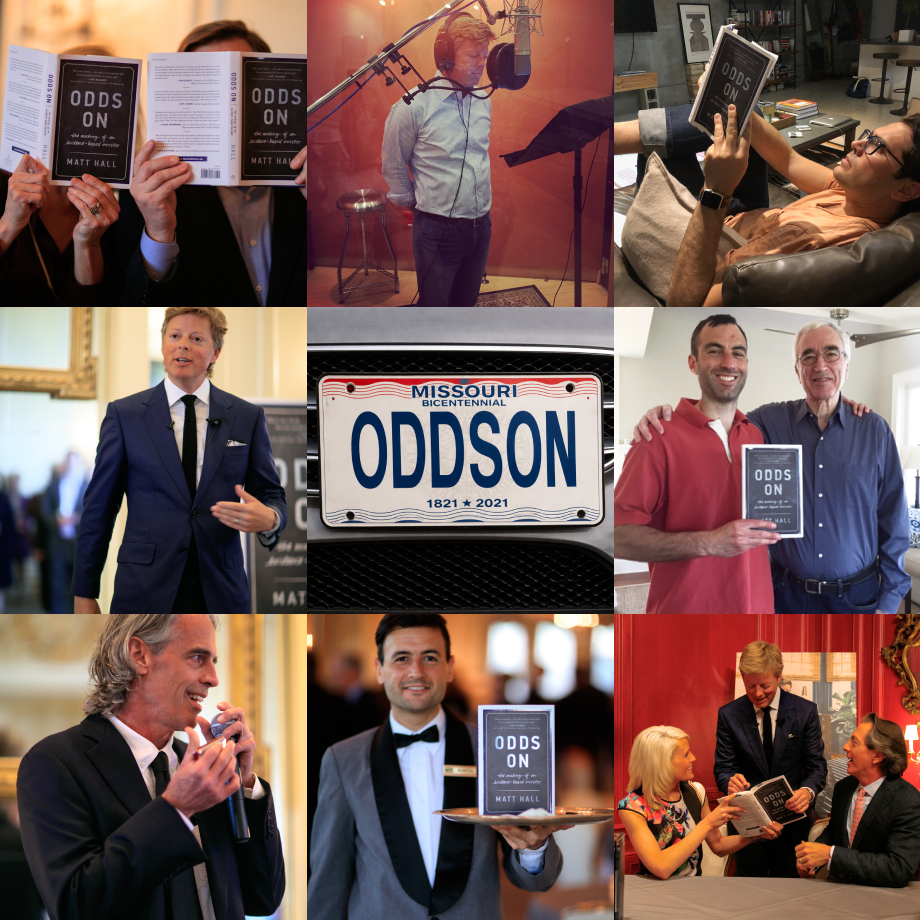
The book also ended up in places we never expected. Conference rooms. Classrooms. Zoom calls. Podcasts. Libraries. We heard from someone connected to the management of a university endowment who asked their board to read it, hoping it might shape how they approached their decisions.
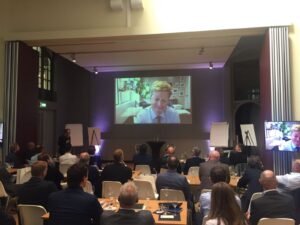
And then there are the stories that just stick with you.
One of my favorites came from an old friend of Matt’s he hadn’t seen in years. He gave the book to his doctor. The next time he saw him, the doctor walked into the room and skipped everything else. He just wanted to talk about the book.
“When he came into the room he did not ask me how I was doing, he immediately went to talking about the book.”
That’s when it hit me.
The book was doing something we couldn’t have done on our own. It was reaching people at the right time, in their own lives, in their own way.
Ten years later, I don’t think about whether the book was a success.
I think about the people who wrote in to us about it. The ones who made a change. The ones who saw things a little more clearly.
That doesn’t happen very often.
I’m glad Matt wrote it.
And I’m grateful for where it went.
Here’s to the next ten years of learning, sharing, and taking the long view.
10 Years of Odds On
 In 1999, a book changed the direction of my life.
At the time, I had recently dropped out of law school and was trying to figure out what was next. I was in that phase of life where you have plenty of energy and curiosity, very little skill, and a strong desire to do something meaningful that helps other people.
Around that time, I met Larry Swedroe.
Larry had written a book called The Only Guide to a Winning Investment Strategy You’ll Ever Need. I still remember sitting down with it and realizing that the first 100- pages quietly reshaped how I thought, not just about money and investing, but about what I wanted to do in my professional life. The approach felt more like a calling than a job.
Until then, I thought investing was about forecasts, predictions, and confident opinions about the future. Larry’s work introduced me to something very different. It was grounded in data and evidence. It showed that humility, discipline, and a long-term perspective were far more powerful than trying to outguess markets and pick winners.
It felt logical, rational, and deceptively simple to me. It smelled like the truth. And I loved it.
That realization set me on a course that eventually led to the creation of Hill Investment Group.
Years later, when we started the firm, I ran into an unexpected problem. We would give clients books like Larry’s because the ideas were so important, and we wanted them to understand our approach at a deeper level. Unfortunately, many people simply wouldn’t read them. Not because the books weren’t good. They were excellent. However, they were technical and written primarily for professionals rather than investors.
This dilemma got me thinking…and searching. I wanted something that could open the door a little wider for readers. Something relatable, understandable, memorable, and useful.
So I tried an experiment.
Instead of writing a technical guide, I “buried the vegetables” inside a story.
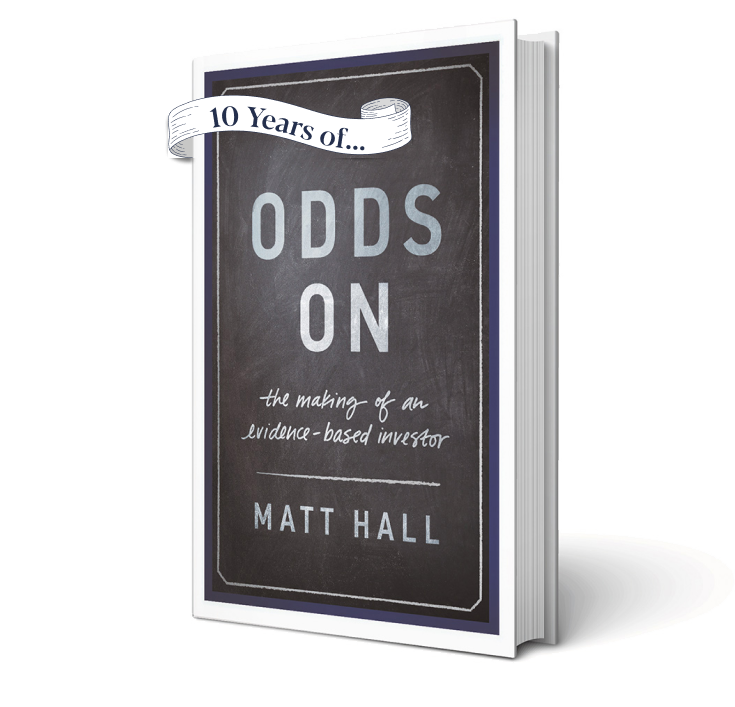
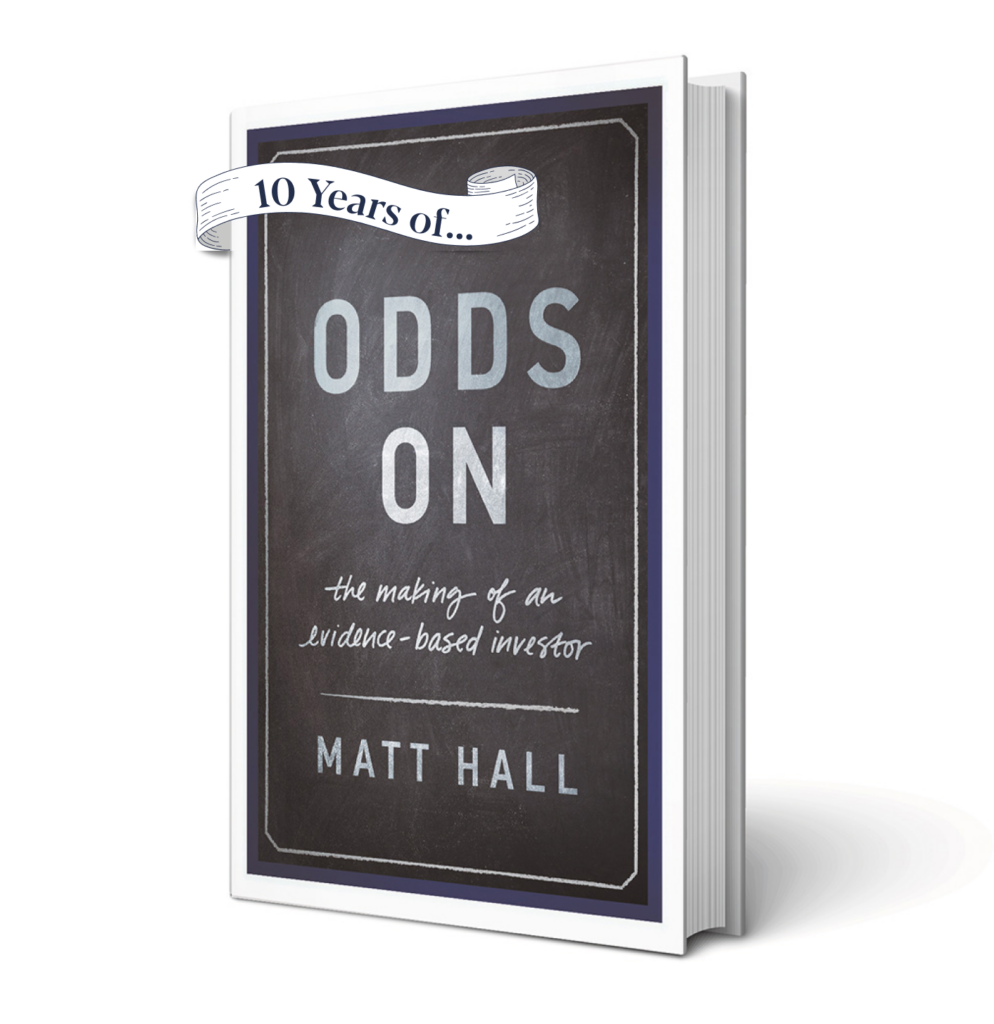
The result was Odds On: The Making of an Evidence-Based Investor. It follows my own coming of age in the investment world, where readers encounter the mentors, lessons, and ideas that shaped the philosophy behind our firm.
A few years after the book came out, I attended a book party on Park Avenue in New York surrounded by other authors. I struck up a conversation with a writer who had created a popular series of illustrated books. After listening to the story of why I had written Odds On, he paused and said something that stuck with me.
I had never heard the phrase before, so he explained.
The first ring develops the idea. The second ring takes that idea and translates it so a broader audience can understand it.
That description felt exactly right.
Larry was part of the first ring. His work changed how I saw investing. Odds On was my attempt to carry those ideas outward in a way that more people could absorb. More real investors, not just practitioners.
When the manuscript first circulated, a few agents told me the book would fail. It wasn’t prescriptive enough. I was warned that most non-fiction business books go nowhere and help no one, especially if the author does not already have a significant following.
Twelve years after writing it and ten years after publication, the story has been far more powerful and interesting than I ever imagined.
The book has traveled widely. It has been read by students, investors, and advisors across the country. It eventually made its way to the Netherlands, where it was translated into Dutch. Along the way, it sparked conversations, friendships, podcast interviews, speaking invitations, and thoughtful notes from readers around the world.
In many cases, the book became the first handshake between us.
Some readers eventually became clients. Some became collaborators and friends. Some changed the investing philosophy of their entire firm. A few even joined our team.
And in a way, the book changed my life too. Not because of copies sold or opportunities created, but because of the relationships that have grown out of it. Over the years, we’ve received more trust, gratitude, and kindness from long-time clients than I ever imagined possible. Compliance rules prevent us from sharing testimonials, but I can say this: the real riches have come from the people.
What began as an attempt to explain a philosophy ended up creating something much more meaningful: a community of people who believe in taking the long view.
Ideas move through rings. Someone discovers them. Someone translates them. Eventually, someone passes them forward.
That ripple effect is what we’re celebrating in this month’s journal.
Ten years after publication, we’re looking back at the journey of Odds On — the ideas behind it, the unexpected places it traveled, and the people it connected us with along the way.
And if the ideas resonate with you, perhaps the next ring starts with something simple: share the book with someone who might benefit from it.
Take the long view,
Matt Hall