Details Are Part of Our Difference
David Booth on How to Choose an Advisor
20 Years. 20 Lessons. Still Taking the Long View.
Making the Short List: Citywire Highlights Our Research-Driven Approach
The Tax Law Changed. Our Approach Hasn’t.
Category: Advanced
A Thoughtful Portfolio Enhancement with Planning Benefits
Every February, I open one envelope with unusual curiosity: my 1099 from our custodian. It shows how much “income” my investments produced last year.
As an investor, I appreciate what that number represents. As a taxpayer, I also know what comes next: plugging it into a projection and watching how it changes what we’ll owe in April.
For me, it’s manageable. I’m still early in my career, and my portfolio is mostly stocks. But for many of the families we serve at Hill, this number can grow large enough that it doesn’t only affect their tax return — it starts to affect their entire financial plan.
And historically, there hasn’t been much we could do about it… until now.
Longview Advantage Fixed Income ETF (LVIG) is an ETF from our research partner, Longview Research Partners. Its aim is to solve a part of planning we historically could not control: Traditional bond investments generate taxable income whether you need it or not.
LVIG is built to avoid those automatic income distributions. Meaning more of the return stays inside the portfolio, which gives us control over how income shows up in your plan.
Like EBI, LVIG will be used inside Hill’s models. It may not be noticeable for younger, equity-heavy investors today. But as portfolios shift over time toward a higher allocation of fixed income, LVIG becomes a meaningful planning tool as well as an outstanding investment.
- Roth IRA conversions: Less portfolio income means more flexibility to convert traditional Individual Retirement Accounts (IRAs) to Roth IRAs during lower-income years.
- Asset location: We can comfortably hold fixed income in taxable accounts and reserve IRA and Roth space for equities, where long-term growth benefits most.
- Medicare and income cliffs like IRMAA (Income-Related Monthly Adjustment Amount), NIIT (Net Investment Income Tax), AMT (Alternative Minimum Tax): Keeping income lower makes it easier to stay below thresholds that trigger higher premiums and additional taxes.
- Trust planning: Trusts hit top tax brackets more quickly than individual tax brackets. Therefore, minimizing ordinary income allows trustees to distribute based on need, not tax pressure.
- Estate planning and step-up in basis: More return remains to compound as unrealized growth that may receive a step-up for heirs instead of getting taxed each year.
- Capital gains control: Lower income gives us more favorable opportunities to harvest gains at lower tax rates.
- Retirement cash flow: We can create distributions intentionally by selling shares at long-term capital gains tax rates rather than generating unpredictable taxable income.
Most of these benefits become especially impactful for clients who are retired or approaching retirement, have large taxable portfolios, are doing Roth conversions, have trusts, or are mindful of Medicare premium thresholds.
For younger clients, this may feel less important today. But over time, as allocations shift toward bonds, it becomes one of the more impactful planning levers available.
This is a good example of the subtle but powerful improvements we like making for clients at Hill Investment Group. Changes that not only improve your investment outcomes, but also make your plan work better behind the scenes.
While LVIG is something we are bringing to Hill portfolios, it will be a publicly traded ETF and available to all investors. Therefore, if you know someone navigating retirement, taxes, or trust planning who could benefit from greater flexibility, feel free to share this with them or have them reach out to us directly to see how we can be most helpful. Here’s the best link to get in touch with us.
Larry Swedroe on the Excess Returns Podcast
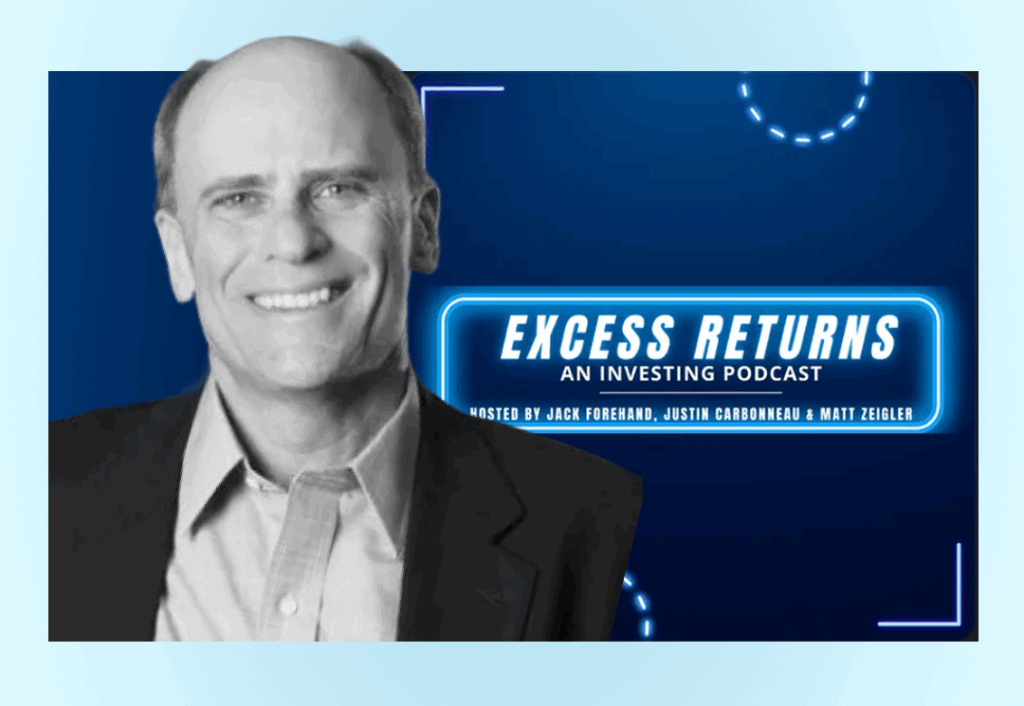
We’re grateful to have Larry Swedroe as both a longtime friend to Hill Investment Group and a foundational voice in the evidence-based investing community. For decades, Larry has helped investors cut through noise, resist prediction-driven thinking, and stay anchored in the data – an approach that has shaped our work and benefited the clients we serve.
In his latest appearance on the October 22nd Excess Returns podcast (the same show our CIO, Matt Zenz, joined recently), Larry brings that perspective to today’s big conversations around tariffs, immigration, AI, and market structure.
“HTC” WARNING: Be forewarned, this is Highly Technical Content, best consumed by the heavy-duty fact finders in our audience and to all those who want to take a deeper dive into why we believe what we believe.
If you only have a few minutes…
Jump to 33:05, where Larry explains why smaller, more nimble funds can access deeper exposures in areas like small-cap value – an insight that reinforces one of the key advantages of our own approach to managing The Longview Advantage ETF (EBI).
It’s a thoughtful, wide-ranging conversation, and we’re thankful for Larry’s ongoing partnership and the clarity he brings to evidence-based investing.
Signal vs. Noise: Private Equity

Private equity funds, which buy and sell companies not listed on a stock exchange, are increasingly being marketed to individual investors. The pitches promote democratizing investing by giving the average investor access to exclusive deals, huge target returns, and a chance to “invest like an institution.”
Headline returns for these investments often look enticing, but research shows that those returns rarely reflect the actual economic experience of investors. For individual investors, the gap between perception and reality can be significant.
Tradeoffs to Consider
High Fees – Private Equity Funds often charge 2% fees on all assets plus an additional 20% of all profits. This introduces a significant hurdle that few private equity managers can overcome when compared to public equity investments. The funds we use to access public markets have an average fee of 0.2%. One-tenth the fee andno additional performance fee.
Misleading Returns – Internal rate of return (IRR) is commonly used to report private equity returns. However, IRR’s calculation depends heavily on the timing of cash flows to the investor. Private Equity firms can game these numbers by manipulating cash flows, making IRR return numbers not comparable to the return numbers you see from public markets. For example, the hypothetical return stream below has an IRR of 33% but an actual return on capital closer to 3%.

Investors should focus on the overall growth of their wealth, not return figures grounded in misleading return metrics.
Lack of Access/Liquidity – Private Equity funds typically have high investment minimums, long lockups, and capital call contracts that make it difficult for investors to allocate money to more than a handful of funds. This creates challenges in diversifying investments across the private equity industry, decreasing the likelihood of achieving reliable long-term investment outcomes. The lack of diversification turns investing in this asset class closer to gambling than a reliable long-term investment strategy.
An Evidence-Based Alternative
At Hill, we believe wealth is best built through broadly diversified, transparent, and low-cost portfolios that match your personal risk profile. Public markets offer exposure to the same economic engine as private equity – global economic growth and human innovation – without the high fees and illiquidity.
New research from Dimensional Fund Advisors puts the conclusion succinctly:
“Broadly diversified, transparent, and low-cost public market strategies provide investors with reliable access to global equity and credit risk premia – without the costs and opacity of private funds.”
We agree.
The Bottom Line
Private markets are often marketed as a path to superior returns, but the data tells a different story. Historically, once you adjust for fees, misleading returns, and illiquidity, private equity performance looks a lot like public stock market performance – just with more complexity and buzzwords.
The real question here is not whether private equity occasionally succeeds – it does. It’s whether it offers long-term, risk-adjusted, after-fee advantages over public markets.
The evidence suggests: not really.
Hill Investment Group Partners, LLC (HIG) is an SEC-registered investment adviser. Registration does not imply a certain level of skill or training. The information in this publication is for educational and informational purposes only and does not constitute an offer to sell, or a solicitation of an offer to buy, any specific securities, investments, or investment strategies. Nothing contained herein should be construed as individualized investment, tax, or financial advice. Always consult with a qualified financial adviser and/or tax professional before implementing any strategy discussed.
Investments involve risk, including the possible loss of principal. Past performance is not indicative of future results. Investment return and principal value will fluctuate so that an investor’s shares, when redeemed, may be worth more or less than their original cost. Future returns may differ significantly from past returns due to market and economic conditions, among other factors.
Performance Disclosure (Hypothetical)
Hypothetical or model performance results, when presented, do not represent actual client performance. Hypothetical results do not reflect the impact of material economic or market factors that would have affected an adviser’s decision-making if managing actual assets. Hypothetical results are for illustrative purposes only and should not be interpreted as guarantees of future performance. Actual client results may differ.
Charts
Charts, graphs, formulas, probability visuals, and other illustrations included in this publication are intended to demonstrate concepts and provide context. They are not intended to be used alone to determine which securities to buy or sell, or when to buy or sell them. These illustrations provide limited information and should not be relied upon as the sole basis for any investment decision.