Signal vs. Noise: Stock Market Concentration Concerns
The Player or the House?
We’re in the Hospitality Business
Client-Exclusive Webinar with David Booth, Co-Founder and Chairman of Dimensional
A Good Estate Plan Should Make Life Easier
Category: Education
Play Ball!
When Opening Day arrives, it brings optimism, but there is also a familiar temptation: to focus on what’s happening now instead of what actually matters over time.
I find myself returning to the ideas of Michael Lewis, not just his iconic baseball book Moneyball, but also his recent appearance on the Acquired podcast. The common thread isn’t baseball. It’s perspective.
Moneyball wasn’t really about baseball statistics—it was about seeing differently. The Oakland A’s, constrained by budget, were forced to challenge conventional wisdom. They stopped paying for what was visible (batting averages, body type, “intangibles”) and instead paid for what actually drove outcomes but was underappreciated (on-base percentage). In short: they exploited inefficiency.
In his Acquired conversation, Lewis reflects on a similar dynamic across industries—how markets, people, and institutions repeatedly misprice what truly matters. The lesson isn’t just about being contrarian. It’s about being patient enough to let the truth play out.
That’s where “taking the longview” comes in.
In investing, as in baseball, the scoreboard updates constantly, but the real game unfolds over seasons (even generations!), not innings. Short-term noise is seductive and sometimes scary. It feels actionable. But it’s often just that: noise. The discipline is in identifying what actually compounds over time and then having the temperament to stick with it when it’s temporarily out of favor.
For our clients, that translates into something simple but difficult: staying invested in what works, even when it temporarily doesn’t feel like it. That’s what we’re doing every day. Helping our clients maintain the behavior that pays off in the long term.
The genius of Moneyball wasn’t the data. It was the willingness to endure looking wrong in the short term to be right over the long term. That’s really hard to do!
At Hill Investment Group, that’s the game we’re playing. Not predicting the next pitch, but building a process that wins over full seasons…full lifetimes.
In the end, the real advantage—whether in baseball or investing—isn’t speed. It’s clarity, patience, and the discipline to let time do the heavy lifting. Thank you for taking the long view with us.
If you’d like a new copy of Odds On (The Moneyball of investing) or want to gift it to a friend or family member, click here. We’re happy to share how it just might transform someone’s future and those that come after them.
What Odds On Set in Motion
When Matt told me he was writing a book, I supported him.
I also wasn’t sure what would come of it.
We had always believed in what we were doing. We had great clients. We were growing. We were already sharing our philosophy with the people we worked with. Part of me wondered if we really needed a book at all.
But Matt felt strongly about it. He wanted to put something out into the world that might help people see things more clearly. So we backed him.
The first line of the book was, “I want this book to change your life.”
That is a big statement. At the time, I didn’t know what to make of it. Turns out, that Odds On is unique – it is not only informative about investing, but it is also engaging on so many other levels.

Over the last ten years, we’ve kept notes from people who read it. Clients, advisors, students, friends, and plenty of people we had never met. Reading back through them now, what stands out is not that people liked the book.
It’s what they did after they read it.
- “I was completely engaged from the first paragraph and couldn’t put it down.”
- “I did not take one break from reading until I was finished, simply because I did not want to put it down.”
Some people found clarity.
- “I was up until after midnight reading your book, and it changed my entire perspective on investing strategies.”
- “Until I picked up your book, I was losing hope for our profession. Your book gave me a much needed breath of fresh air.”
- “We are gradually converting all our existing clients and spreading the word to others in our office.”
- “I found your story so inspiring that I am seriously thinking of leaving my current job to start something new.”
And some of the most meaningful notes had very little to do with investing.
People who had gone through their own medical challenges wrote to Matt after reading his story. They shared things they don’t usually share. That part of the book reached people in a different way.
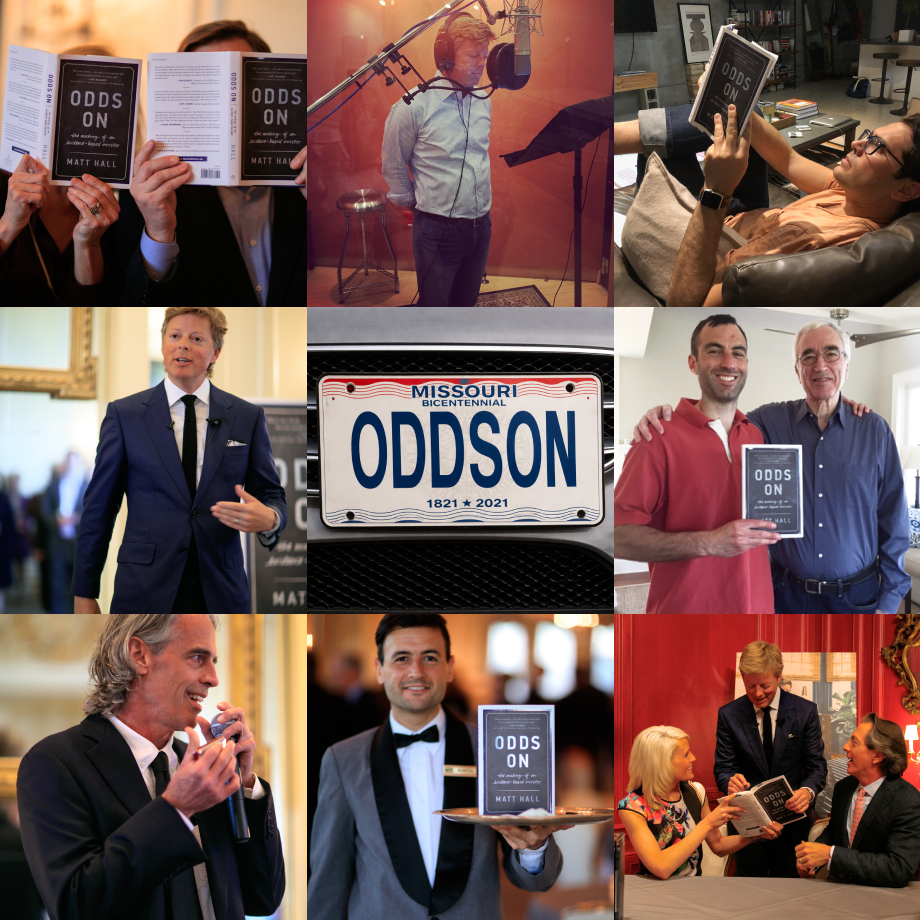
The book also ended up in places we never expected. Conference rooms. Classrooms. Zoom calls. Podcasts. Libraries. We heard from someone connected to the management of a university endowment who asked their board to read it, hoping it might shape how they approached their decisions.
And then there are the stories that just stick with you.
One of my favorites came from an old friend of Matt’s he hadn’t seen in years. He gave the book to his doctor. The next time he saw him, the doctor walked into the room and skipped everything else. He just wanted to talk about the book.
“When he came into the room he did not ask me how I was doing, he immediately went to talking about the book.”
That’s when it hit me.
The book was doing something we couldn’t have done on our own. It was reaching people at the right time, in their own lives, in their own way.
Ten years later, I don’t think about whether the book was a success.
I think about the people who wrote in to us about it. The ones who made a change. The ones who saw things a little more clearly.
That doesn’t happen very often.
I’m glad Matt wrote it.
And I’m grateful for where it went.
Here’s to the next ten years of learning, sharing, and taking the long view.
The Next Step
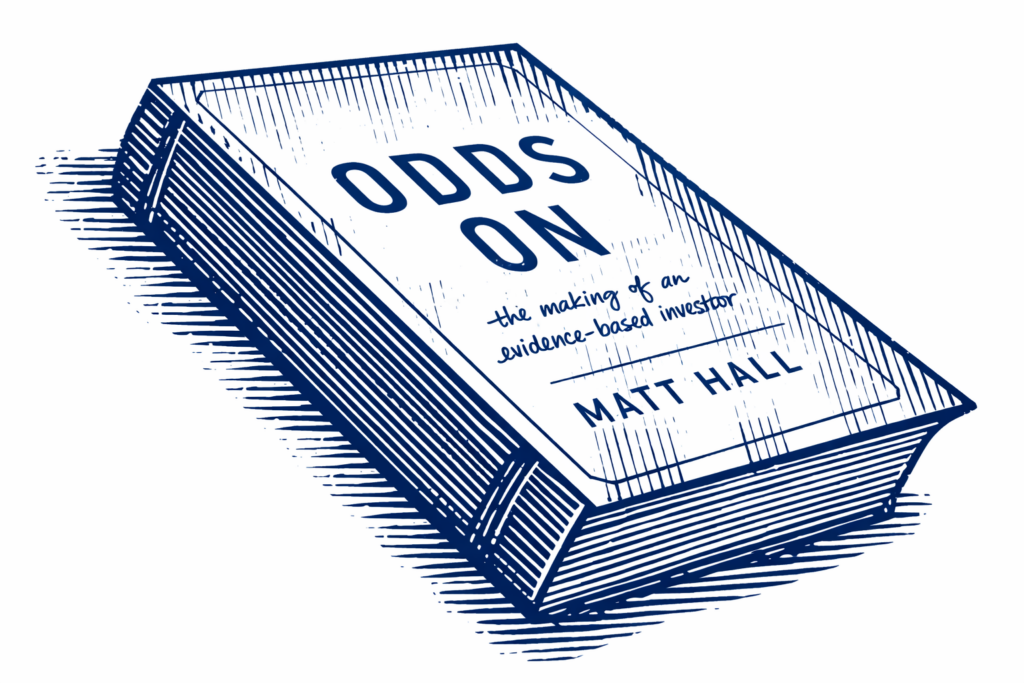
If you’re feeling pulled around by headlines, Odds On was written for moments like this. It’s a reminder that better decisions come from a clear process, not a hot take.
Start with the Intro to Odds On. We’re sharing it as a short PDF, linked below, so you can get a quick taste of the book, or re-read it as a reset when you need one.
Our suggestion: Read the first sentence. Then read it again slowly. Think about it for a minute. Read it one more time. Then dig in. See where the journey takes you. Many others have found the read transformational. Please share your experience!
Read the Odds On Intro
If you’d like a full copy, we’re happy to send one to you or to someone in your life you’d like to share it with. Physical book, Kindle, or audio. Your choice.
If you want to talk more about how to put the philosophy into action, email Buddy directly at buddy@hillinvestmentgroup.com. We’ll help you apply these ideas to your situation and map a clear next step.