
Signal vs. Noise: Stock Market Concentration Concerns
The Player or the House?
We’re in the Hospitality Business
Client-Exclusive Webinar with David Booth, Co-Founder and Chairman of Dimensional
A Good Estate Plan Should Make Life Easier
Category: Values
The Long View on Estate Planning

After I earned my Certified Financial Planning (CFP(R)) designation, my grandparents were both proud and curious. They asked me to take a look at their finances and see if there was anything they should be doing differently. My grandpa had always managed things on his own and had done well, but one glaring gap stood out: they hadn’t done any estate planning.
They didn’t know what a trust was or where to start. But they did know what mattered most: how they wanted their assets to pass, which of their children they trusted to handle things, and that they wanted to make the process as easy and stress-free as possible for their family one day.
For someone used to doing everything himself, my grandpa recognized that this was one aspect of his life that he needed to delegate. He also saw the value in doing some work now to make life easier for his kids later, a small act of love that will one day make a big difference.
That mindset captures how we typically approach estate planning with our clients at Hill. It can feel complicated and overwhelming, but when you focus on the big picture and surround yourself with the right team, it becomes a powerful way to protect your family and preserve your legacy.
No two estate plans look the same. Some are wonderfully simple, others more complex. There’s no “right” way to do it—only what’s right for you. That’s why we take time to understand each client’s values, family dynamics, and long-term vision before collaborating with their attorneys and CPAs to design a plan that fits.
Here are a few guiding questions we use when helping clients update or establish their plan:
- Is it easy to understand? You should be able to explain the big picture in plain English.
- Does your team collaborate on your behalf? Your attorney, CPA, and Hill advisor should be aligned so your investments, taxes, and estate all work together.
- Are you avoiding probate? The right structure may help your family avoid a lengthy and expensive court process.
- Are your heirs protected? Your plan should clearly state how and by whom assets will be managed.
- Is everything included? It’s easy for accounts or property to be left out due to incorrect titling.
- Who will carry out your plan? Executors, trustees, powers of attorney, and guardians can all play important roles. It’s important to make sure they understand and accept them.
When my grandparents’ plan was complete, my mom (named as executor) told me multiple times how relieved she felt knowing everything was organized and clear. That sense of clarity is exactly what we hope to provide for every Hill family.
Estate planning isn’t one-and-done; it’s an ongoing act of care, and it’s part of Taking the Long View®. We generally recommend our clients to review their plan every five years, or sooner if life or laws change. Families grow, goals evolve, and your plan should, too.
If you’re wondering whether your plan still fits, or if you’ve been meaning to get started, we’d love to help you or a loved one take that next step.
Email us at askanadvisor@hillinvestmentgroup.com to connect with your Hill advisor and start the conversation.
Our Office Hours During the Season of Gratitude
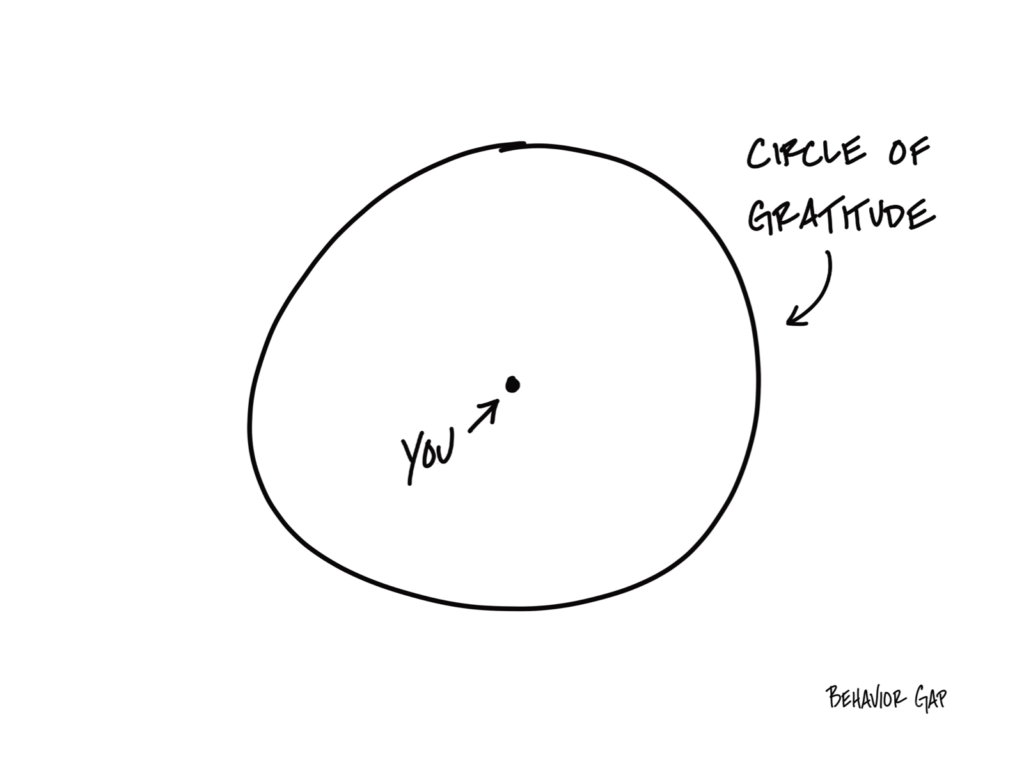
As the holiday season approaches, our team wishes you the gift of slowing down—to reflect, recharge, and enjoy the moments and people that matter most. In that spirit, and for your planning purposes, we want you to know that our office will be closed on Thursday, November 27, and Friday, November 28, in observance of Thanksgiving.
If you anticipate needing anything during that time frame, let’s address it now. Call us at (314) 448-4023 or set a time to meet. It’s all part of finishing the year strong!
Wishing you and your loved ones a peaceful and joyful holiday season, with gratitude,
The Hill Investment Group Team
Signal vs. Noise: Are Structured Notes Too Good to Be True?

Welcome to the age of the “finfluencer.” Some voices bring real experience, many optimize for clicks, not your interests. At Hill Investment Group, we believe good advice should be simple, clear, and grounded in evidence, not hype. This new series examines popular claims circulating online or in print, and separates signal from noise.
We aim to inform, not entertain; substance over speculation.
Heard something at work, on the course, or on social media that has you wondering, “Should I pay attention to this?” Share it with us at zenz@hillinvestmentgroup.com. We will help unpack it. Submissions are confidential. With your permission, we may quote an anonymized version in a future post.
Please note: Submissions are reviewed for educational purposes only and do not constitute personalized investment advice.
Structured notes—sometimes called structured or derivative products—are contracts issued by banks or financial institutions. Their performance depends on how certain markets behave, but with specific features built in.
For example, a note may be linked to the S&P 500, offering returns up to a maximum (say 9%) while limiting downside risk. If the market declines, you might receive your principal back. If the market rises, your return is capped at the maximum.
These products typically combine bonds with options. The bond portion provides stability or income, while the options alter the return profile with added features such as caps, buffers, or payouts tied to specific outcomes. Importantly, they do not create new investment opportunities; they repackage existing securities in different ways.
Structured products are often designed and priced by the issuing institution. A simple illustration:
- Package bonds and options that may be worth slightly less than the purchase price.
- Market the package in a way that addresses an investor’s concerns (for example, fear of loss or desire for enhanced returns).
- Sell it at a markup.
The difference, though it may look small, represents revenue for the bank. Like insurance, protection, or enhancement features come at a cost, which is reflected in the structure’s design and pricing.
Structured notes are not “free.” For every feature that reduces downside risk, there is typically a tradeoff in the form of reduced upside potential. For example, capping gains in strong years may limit long-term growth.
Other considerations can include:
- Complexity: The payoff formulas are often difficult to evaluate without specialized knowledge.
- Liquidity: Notes may be hard to sell before maturity.
- Taxes: Some structures can create less favorable tax treatment.
- Transparency: It may be difficult to fully assess all costs and risks.
These factors mean that outcomes may differ significantly from expectations, and actual results depend on market conditions and the structure itself.
At Hill Investment Group, our philosophy is that portfolios should be built around a client’s unique risk profile using tools that are transparent and cost-efficient. Instead of relying on complex products, we focus on combining equities and high-quality fixed income in a way that is diversified, tax-aware, and grounded in decades of academic research.
This approach does not promise to eliminate risk or guarantee returns. Rather, it seeks to create a risk/return balance that clients can understand and commit to over the long term.
Structured notes can sound appealing because they are often presented as solving two problems at once, offering upside with protection on the downside. In practice, they involve tradeoffs that should be carefully weighed. For many investors, a straightforward evidence-based portfolio may provide more transparency and better alignment with long-term goals.
Hill Investment Group is an SEC-registered investment adviser. This material is for informational and educational purposes only and should not be construed as personalized investment advice or a recommendation to buy or sell any security. Past performance is not indicative of future results. All investing involves risk, including the potential loss of principal. References to structured notes or other investment products are for illustrative purposes only and should not be interpreted as a guarantee of outcomes. Please consult your financial, tax, and legal advisors regarding your individual circumstances.
