Long View Summer Reads
Signal vs. Noise: Great Companies Don’t Always Make for Great Investments. The Evidence Around IPOs.
Beyond the Number
A Book That Changed How I Think About Aging
What Happens When the Noise Gets Quiet
Tag: Hill Investment Group
Spring Cleaning: Winning by Getting Organized

Sometimes the biggest financial wins don’t come from a brilliant move. They come from getting organized.
We’ve seen this firsthand. A client came to us feeling on top of things – accomplished, busy, managing a growing family. Over time, their accounts, statements, and documents had multiplied across different places. Once we gathered and consolidated everything, they discovered more than $1M they hadn’t been accounting for.
That’s what happens when complexity accumulates faster than anyone stops to sort through it. Smart people are busy. Accounts open gradually, responsibilities stack up, and what isn’t organized stays invisible.
Finding $1M matters. But putting it to work intelligently, rather than leaving it in cash or scattered across forgotten accounts, is where the real impact is. Invested well over 30 years, that capital can create real choices: retiring earlier, retiring differently, giving in ways that reflect your values. For the next generation, the difference can be even greater.
This is what it looks like to have someone bringing clarity and coordination to your financial life.
If you’ve been meaning to get a clearer picture of where things stand, we’d be glad to help. Many of our clients sleep better knowing every dollar is accounted for. Set up a time here.
Play Ball!
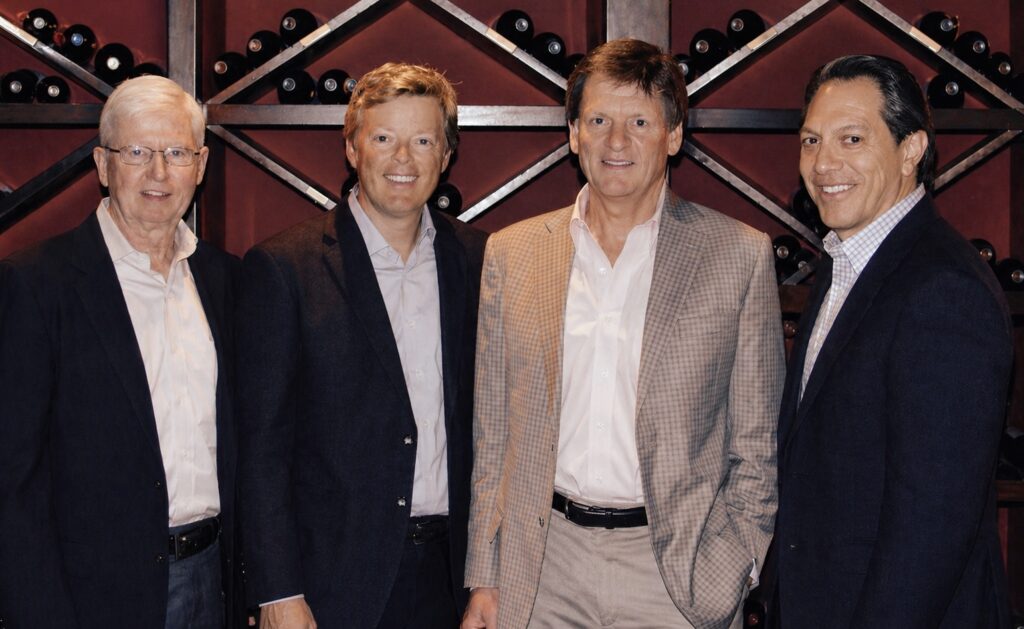
When Opening Day arrives, it brings optimism, but there is also a familiar temptation: to focus on what’s happening now instead of what actually matters over time.
I find myself returning to the ideas of Michael Lewis, not just his iconic baseball book Moneyball, but also his recent appearance on the Acquired podcast. The common thread isn’t baseball. It’s perspective.
Moneyball wasn’t really about baseball statistics—it was about seeing differently. The Oakland A’s, constrained by budget, were forced to challenge conventional wisdom. They stopped paying for what was visible (batting averages, body type, “intangibles”) and instead paid for what actually drove outcomes but was underappreciated (on-base percentage). In short: they exploited inefficiency.
In his Acquired conversation, Lewis reflects on a similar dynamic across industries—how markets, people, and institutions repeatedly misprice what truly matters. The lesson isn’t just about being contrarian. It’s about being patient enough to let the truth play out.
That’s where “taking the longview” comes in.
In investing, as in baseball, the scoreboard updates constantly, but the real game unfolds over seasons (even generations!), not innings. Short-term noise is seductive and sometimes scary. It feels actionable. But it’s often just that: noise. The discipline is in identifying what actually compounds over time and then having the temperament to stick with it when it’s temporarily out of favor.
For our clients, that translates into something simple but difficult: staying invested in what works, even when it temporarily doesn’t feel like it. That’s what we’re doing every day. Helping our clients maintain the behavior that pays off in the long term.
The genius of Moneyball wasn’t the data. It was the willingness to endure looking wrong in the short term to be right over the long term. That’s really hard to do!
At Hill Investment Group, that’s the game we’re playing. Not predicting the next pitch, but building a process that wins over full seasons…full lifetimes.
In the end, the real advantage—whether in baseball or investing—isn’t speed. It’s clarity, patience, and the discipline to let time do the heavy lifting. Thank you for taking the long view with us.
If you’d like a new copy of Odds On (The Moneyball of investing) or want to gift it to a friend or family member, click here. We’re happy to share how it just might transform someone’s future and those that come after them.
The Book that Brought Me to Hill
Last month, we dedicated an issue of the journal to Odds On. As we were putting that together, I had a realization. The reason I’m actually here at Hill is because of this book I read years ago.
Before Hill, I worked at Dimensional Fund Advisors. That’s how I met Matt Hall, through a study group we were putting together of advisors who had an aptitude for media and marketing. In advance of that meeting, I read Odds On. What initially stuck out to me is how the book reads. It’s not a typical finance book. There’s no jargon. There are no equations. It’s simply a story about someone finding a better way to invest and building a firm that treats clients right.
Hill is a really special place. What is apparent to me now is that the values and the things that drew me into the firm years ago still ring true. The intentionality we put into every interaction. The hospitality we try to show our clients every step along the way.
Making the switch ultimately gave me the ability to use my CFP in a much more meaningful way. Rather than just focusing on investments, now I get to help and guide clients through some of the most important financial decisions of their lives.
Looking back, reading Odds On and meeting Matt felt relatively small at the time. Today it feels more monumental. It led me to where I am now, and it shaped the way I show up for this work and the way we want to treat clients every day here at Hill.